
Bukhara – is a city that is more than 2000 years old. It is an example of a medieval city in Central Asia where entire neighborhoods with their ancient air have been preserved to this day. For centuries, Bukhara was a fertile oasis in the Zerafshan River Valley on the Great Silk Road, the main center of science and culture. Archaeological excavations show that settlements appeared as early as the time of the Kushan Empire in the 2nd millennium BC. In the 4th century it was incorporated into the Ephthalite state. Before the Arab conquest, Bukhara was one of the largest cities in Central Asia from the point of view of economic development, its strategic location in a rich oasis at the crossroads of ancient trade routes. It became an important cultural center of the Caliphate of Baghdad in 709. In 892, Bukhara became the capital of the independent Samanid kingdom. But the great economic growth was destroyed with the looting of the city in 1220 by the Mongol hordes of Genghis Khan. Economic stability was restored only during the Timurid era in the 14th century, when the city became part of the empire.
In the Middle Ages, Bukhara was a holy city for all Muslims in Central Asia; not only from a religious point of view, but also aesthetically. Bukhara was considered a place of glory, a home for many famous personalities of the time. The author of the second most important Islamic book after the Quran, the book of authentic khadiths, Al-Jami as-Sahih, was Imam Al-Bukhari. Abu Ali Ibn Sina, known in the West as Avicenna, was born in a small village near Bukhara and began his career there. The respected Sheikh Bahauddin Nakshbandi, the founder of the Sufi order, was also born in Bukhara. Bukhara gave to the world such important personalities as the historian Narshakhi and the poets Roudaki and Dakiki. Even the local folklore thug, Khodja Nasriddin, came from Bukhara. The centuries-old heritage of scientists, thinkers, architects and poets has given the city titles that put it on the pedestal, such as « Domes of Faith », « Noble Bukhara », « Blessed City ». The historic center of Bukhara, which contains many mosques and coranic schools, has been declared a UNESCO World Heritage Site. You will need two full days to be able to contemplate the wonders of the holy city. Welcome to « Bukhoroi Sharif » – Bukhara The Noble !
Sights and attractions of Bukhara
Complexe Lyabi-Khaouz

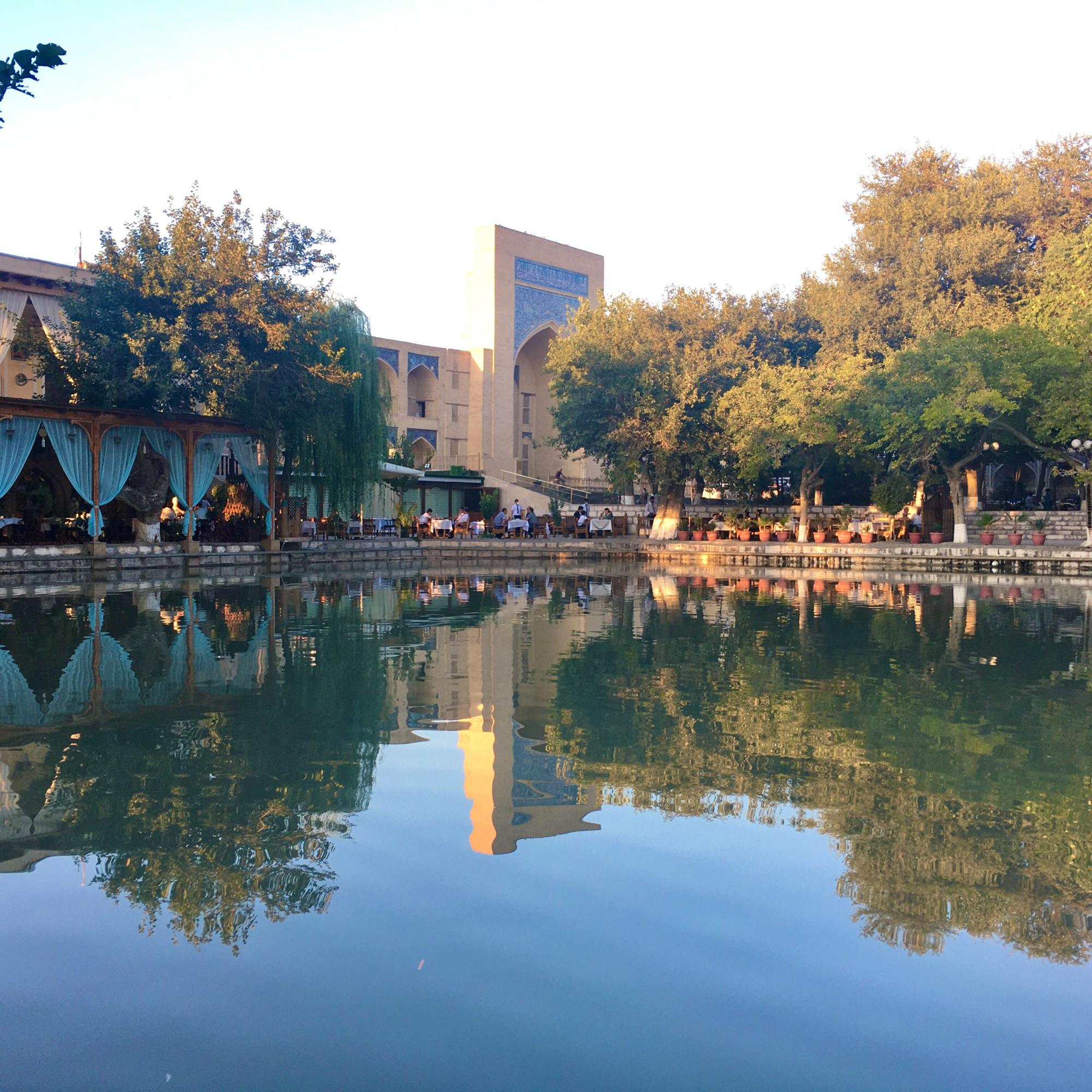
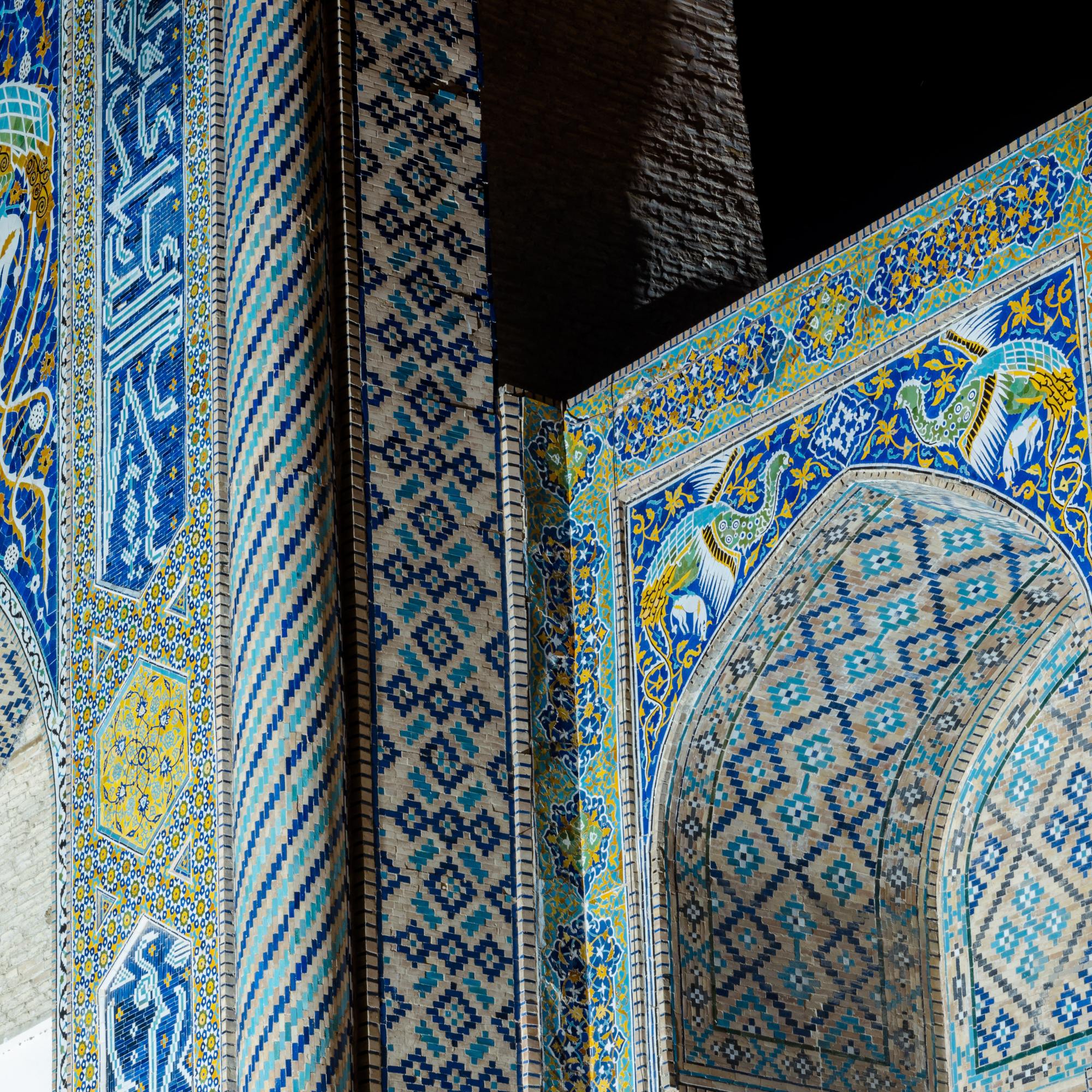


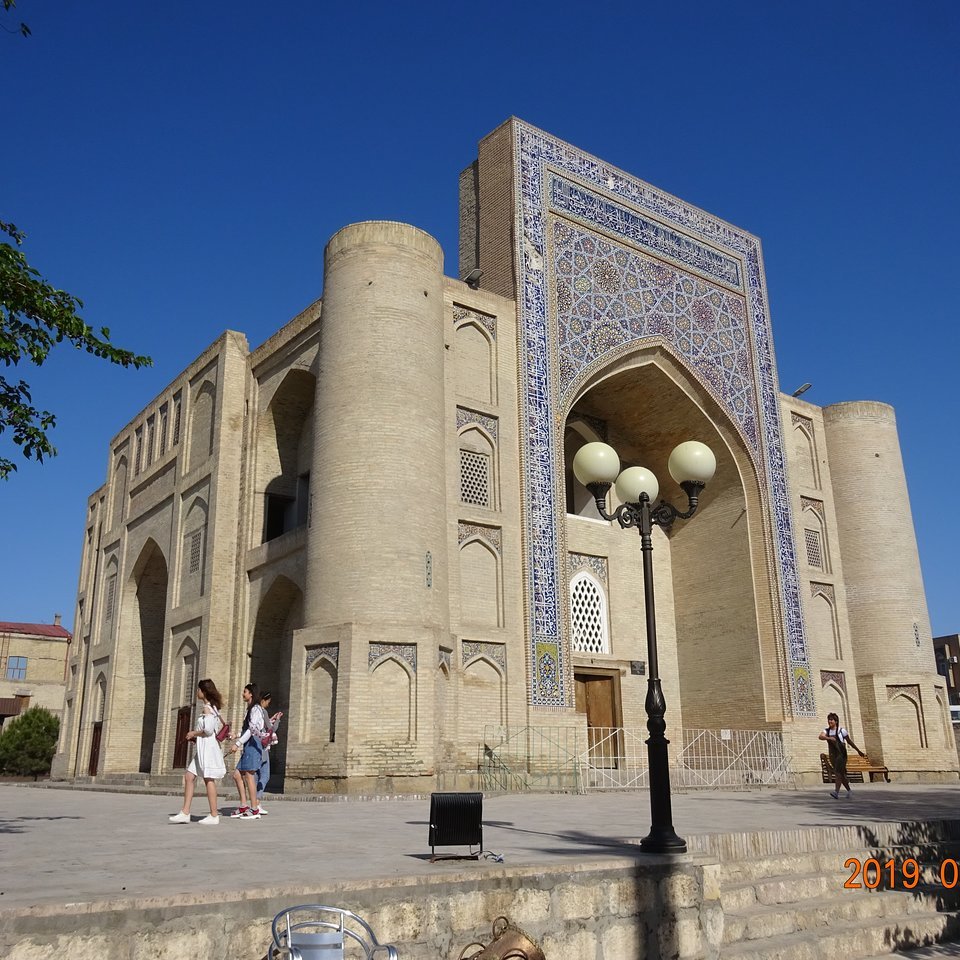
Lyabi-Khauz is an architectural complex located in the heart of Bukhara, consisting of three monuments. This set is built around a large khauz (water reservoir). First of all, it is the madrassah of Kukeldash which was built in 1568-1570. The madrassah had 160 cells and was the largest Koranic school in Bukhara. 50 years later, in 1620, during the reign of ruler Imamkulikhan, the local dignitary Nadir Divanbegi decided to build a khanaka, an inn for traveling dervishes. The building was not very big. South of Khanaka, the main channel of Bukhara, Shakhroud, supplied the population with water. This is how the complex took its name Lyabi-Khauz, which literally means « at the edge of khauz (basin) ». Nadir Divanbegi, had great influence in state affairs and, in the absence of the sovereign, negotiated agreements on his behalf with foreign emissaries. Using his authority, he wanted to build a profitable caravanserai on the right bank of the basin, which should face the khanaka. However, Imamkulikhan, during the inauguration of a supposed caravanserai, praised his dignitary Nadir Divanbegi for having built « a beautiful madrassah », and Nadir Divanbegi was compelled to convert the caravanserai into a madrassah. The layout of the structure proves the fact that the building was designed as a caravanserai. The entrance is straight, not square as in the Kukeldash madrassah. The back of the building has an entrance for horses. There were no classrooms and terraces for summer lessons. A large portal was placed on the front of the structure. It is decorated with mosaics with fantastic birds flying in the rays of the sun.
Magoki Attori mosque


This ancient monument has kept more mysteries for archaeologists and historians than other historical monuments in Bukhara. Before the Arab conquest there was a market here, Magoki Attori (which means a « medicinal herb market »). Over the centuries, the level of the ground had risen several meters and she had found herself half underground. During archaeological excavations conducted by Russian archaeologist Shishkin, the existence of the first mosque of the 9th century was discovered. In 937, the mosque with four pillars was destroyed during the fire of the city and it was in the 12th century that the new mosque was erected, of which we see the remarkable southern portal. An eastern entrance surmounted by a dome was added in 1546, but it is from the south that the mosque is accessed today.
Ulugh Bek and Abdoulaziz khan madrassah
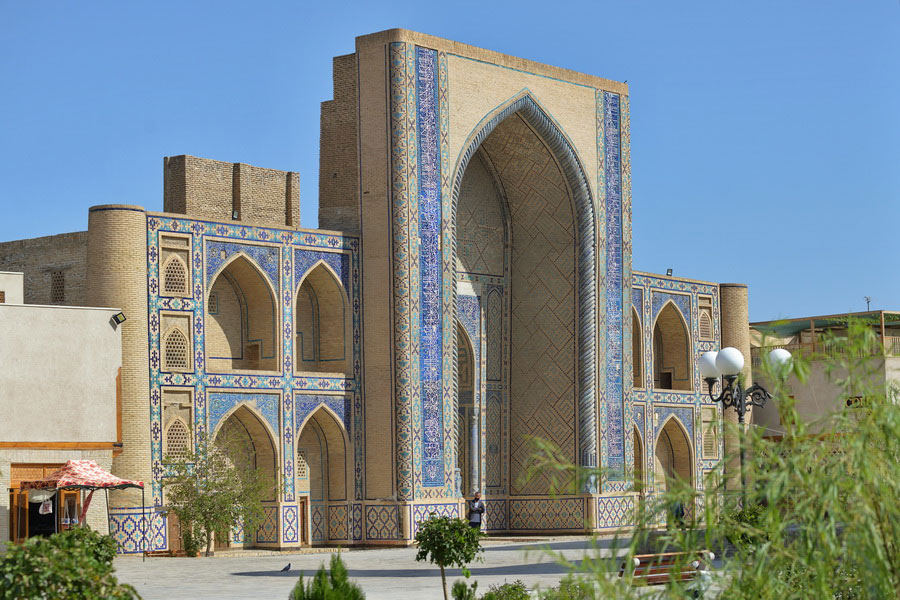

« Aspiration for knowledge is the duty of every Muslim man and woman » – this is how the gigantic writing on the gate of the madrassah of Ulugh Bek in Bukhara read. The ornament patterns are dominated by astral elements which can be associated with Ulugh Bek’s worldview as an astronomer.
Opposite the Ulugh Bek madrassah is the Abdulaziz-khan madrassah. Bukhara’s Khan Abdulaziz built it in 1651 – 1652 and it is the last great madrassah in Bukhara. On the walls of the madrassah, instead of modest geometric and vegetal ornaments, a more complex and variegated ornament appears. There are images of the Chinese dragon and the Semurg bird. Yellow colors are used in the color range of bricks. There are two mosques in the madrassah – the winter one and the summer one. The two mosques are distinguished by their exceptional luxury in the finishing of the walls and the ceiling.
Poï-Kalon ensemble (Kalon mosque and minaret, Miri-Arab madrassah)
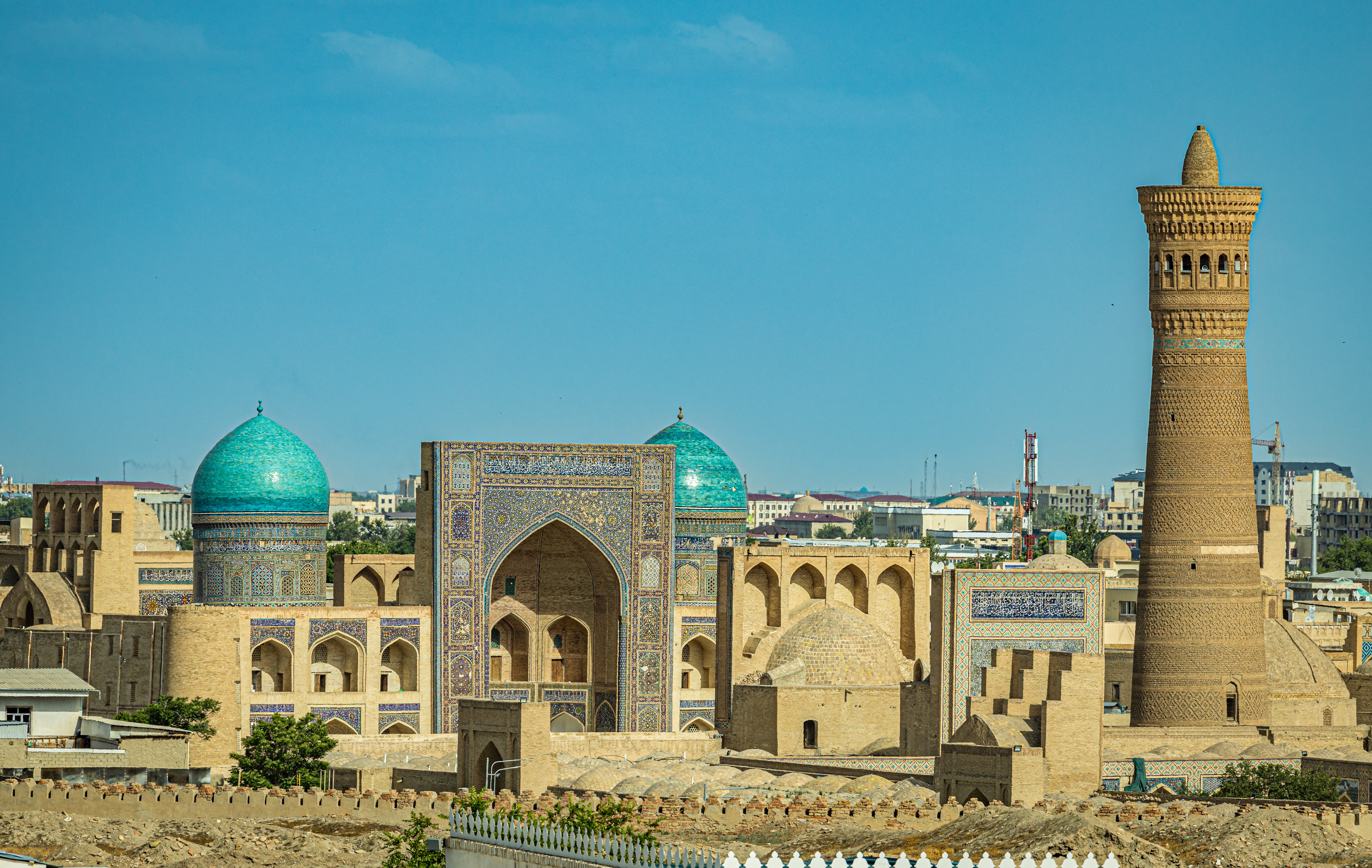
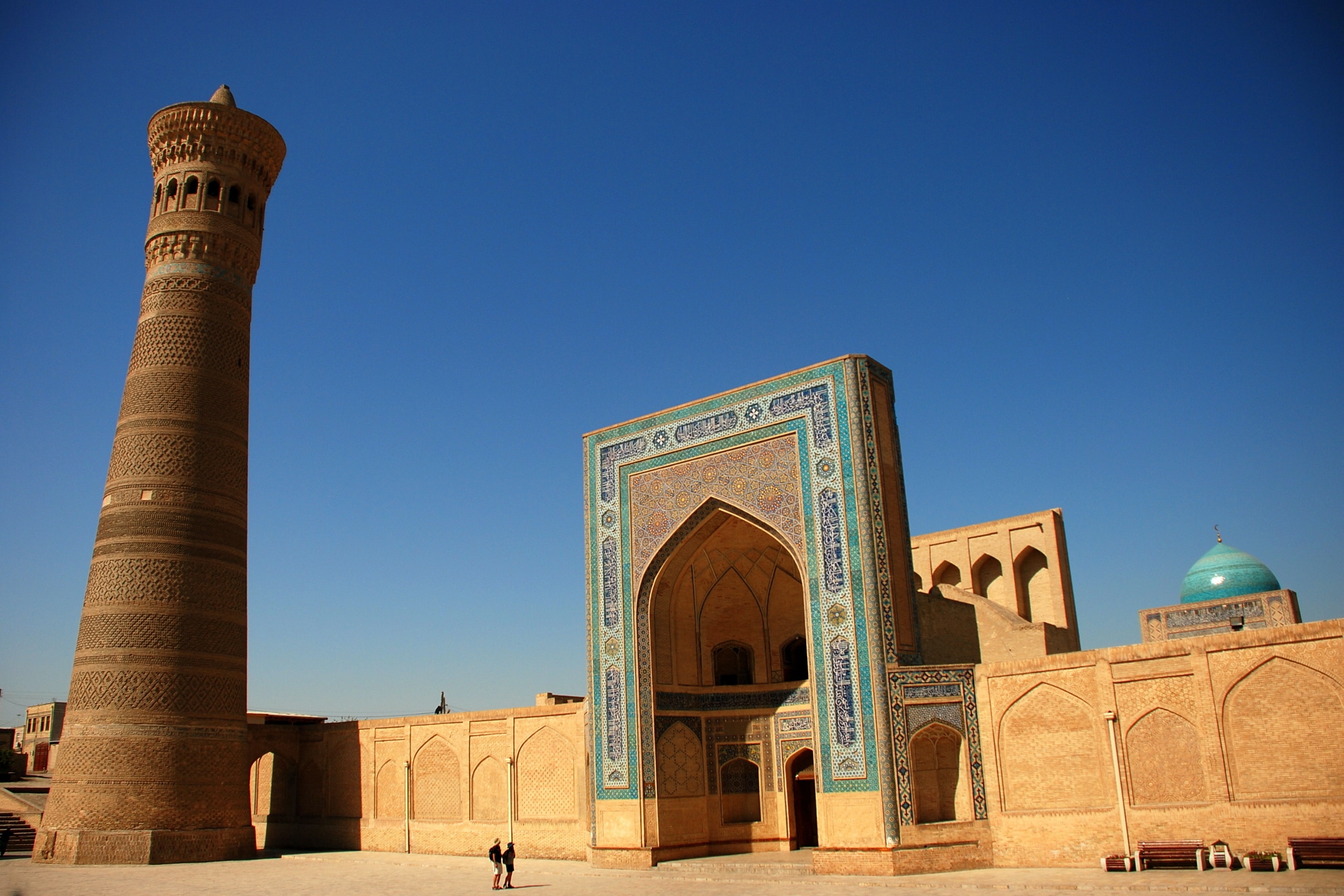
Minaret. The minaret and the tallest building in the city. He is the symbol of the city. It was built in 1127 by the Karakhanid khan Arslan khan. The minaret stands on an octagonal base, and rises in a succession of ten glazed brick rings to a lantern where the summit gallery is located, with 16 windows. You can find a brick that dates the construction of the minaret to 1127. The last capital punishment was carried out in 1884. The upper part was badly damaged during the civil war, the minaret was restored in 1923.
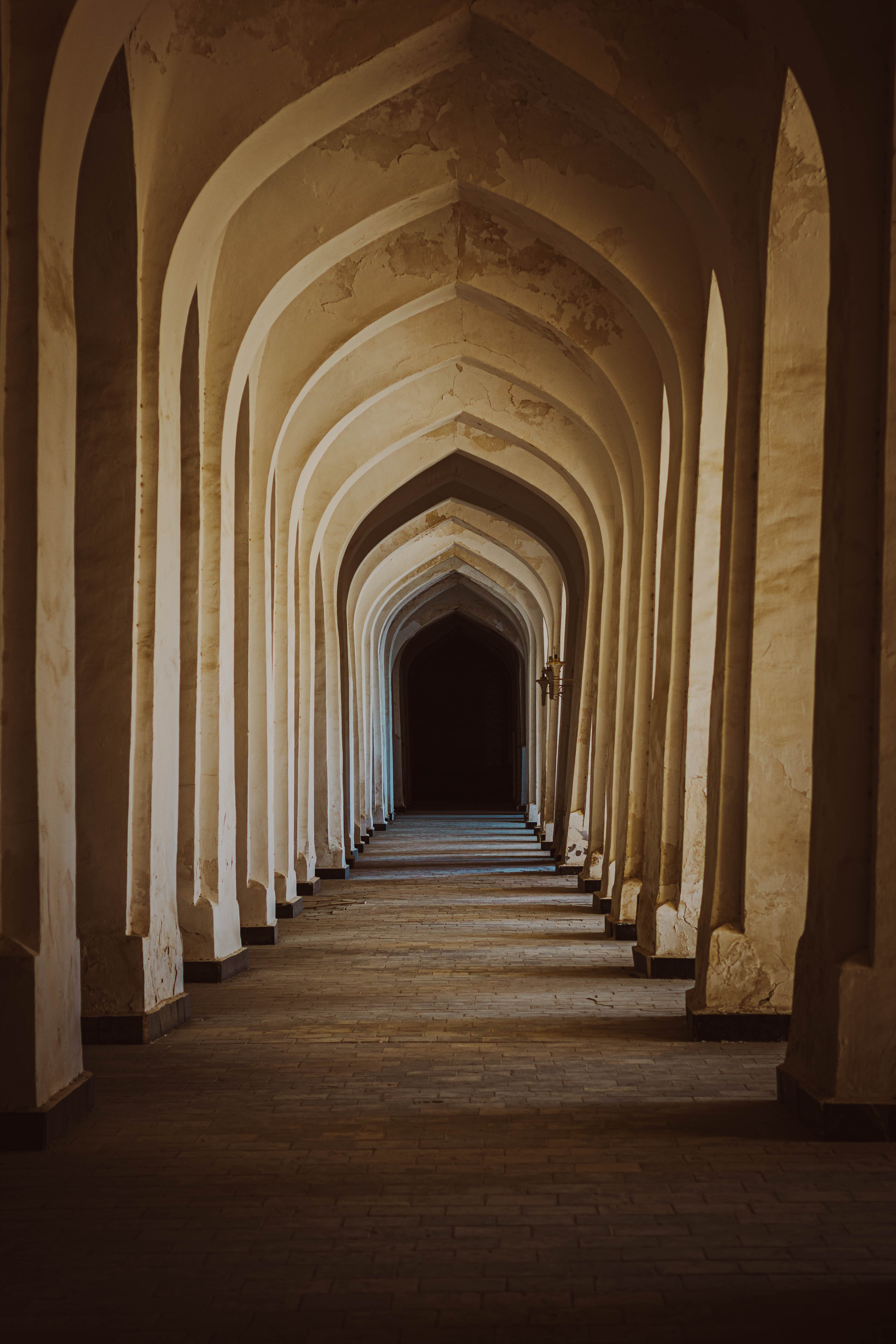
Mosque. The Kalyan mosque is one of the most remarkable monuments in Bukhara which dates back to the 15th century. According to data from archaeological excavations, the original mosque from the Karakhanid era was destroyed by fire and dismantled, apparently at the time of the Mongol invasion. The layout of the Juma mosque (called the Kalyan mosque) is traditional: a rectangular courtyard with a large, high maksura hall on the western side. Each of the axes of the courtyard has a large aiwan, and the perimeter of the courtyard is made up of pillared galleries (there are 208 pillars and 288 domes). The maksura is square with deeply sunken niches on the transverse axis and a mihrab on the main axis. The slab is typical of the early 15th century: an octahedron of arched pendentives supports a vaulted inner dome and is surmounted by a blue spherical outer dome on a drum. This structure still dominates the skyline of Bukhara. The construction of the mosque was completed in 1514 under the leadership of Ubaidulla-khan.
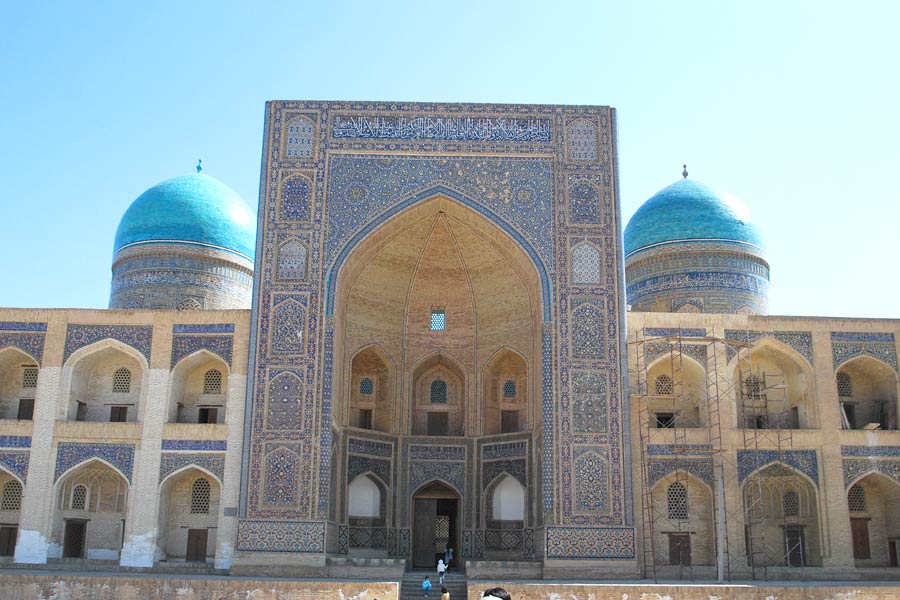
Madrassah. The Miri-Arab madrassah was built in the 16th century by Sheikh Abdallah Yamani (from Yemen), the religious leader and spiritual guide of Ubaydula Khan. Madrassah Miri Arab is a building of classical architecture, one of the most interesting in Bukhara. Nowadays, students follow Islamic studies there with the aim of receiving the title of imam. From the outside, its look is imposing and its two blue domes echo the Kok Gumbaz of the Kalon mosque. It has deteriorated over the centuries, but today the building has been well restored.
The Ark Citadel


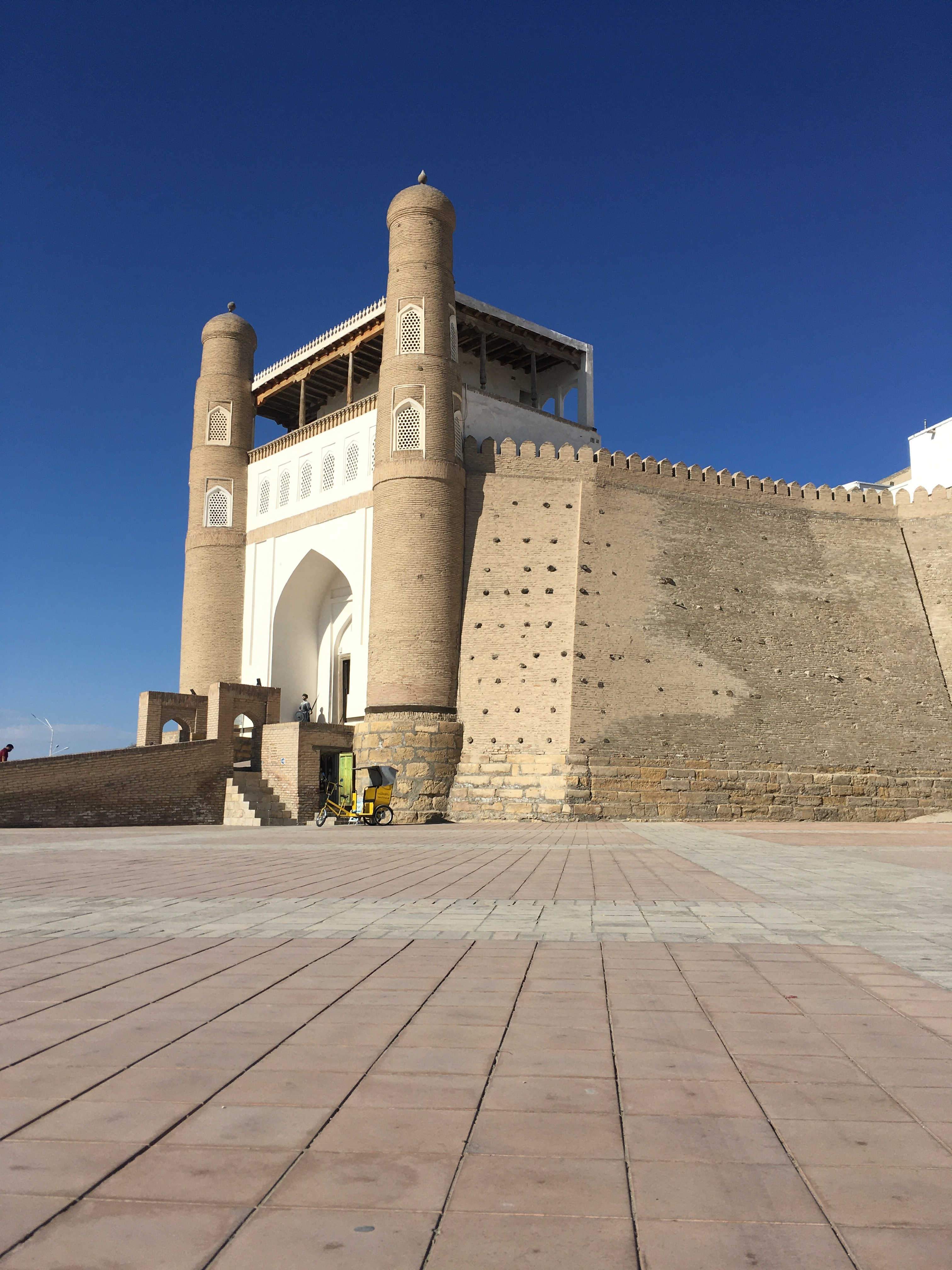

The Ark Citadel is a winter residence of the emirs of Bukhara. According to archaeological data the first fortress was erected here in the 4th century BC. Over the many years of construction and destruction, an artificial hill 20 meters high was formed; its upper layers were built at the time of the last emirs of Bukhara. The general plan is being restored by historical documents. The fortress comprised the entire city, consisting of closely accreted houses, courtyards and yards with state institutions, the emir, his wives and the living quarters of relatives and officials.
There is also a folk version of the emergence of the Ark fortress which is reflected in the legend of Siyavush, the hero of Ferdowsi’s epic poem « Shah Name » (« Book of Kings »). The beautiful Siyavush who hides from the pretensions of the mother-in-law, has come to a rich country, lying in a desert oasis. The local king’s daughter captured the young man. But the king set a shrewd condition on Siyavush. He stretched out a bull’s skin with the words: « Build me a palace on the ground that will fit on this skin ». But Siyavush was even more cunning. He cut the skin into thin strips, connected the ends together and built a palace inside this circle. Thus, according to legend, the Arc Fortress appeared.
Bolo Khaouz mosque
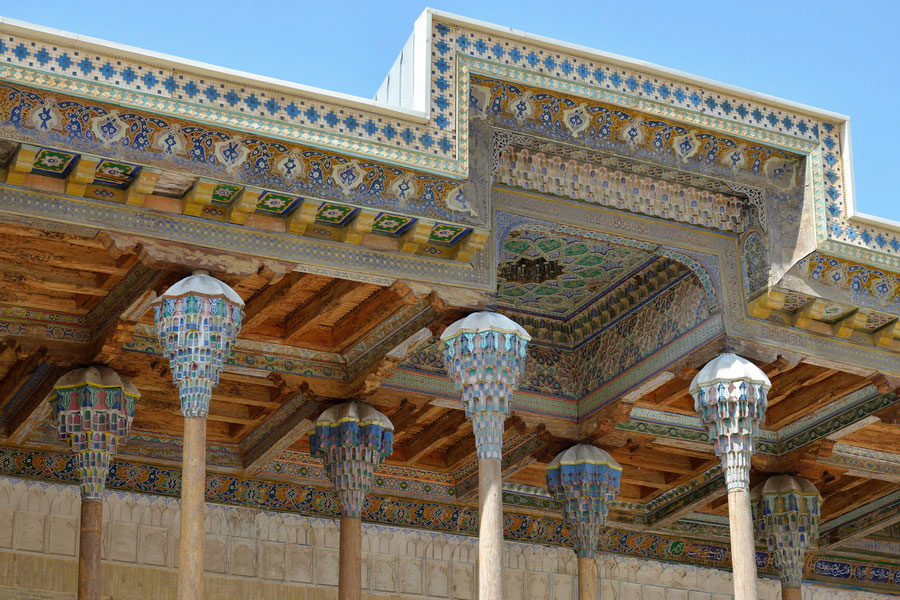
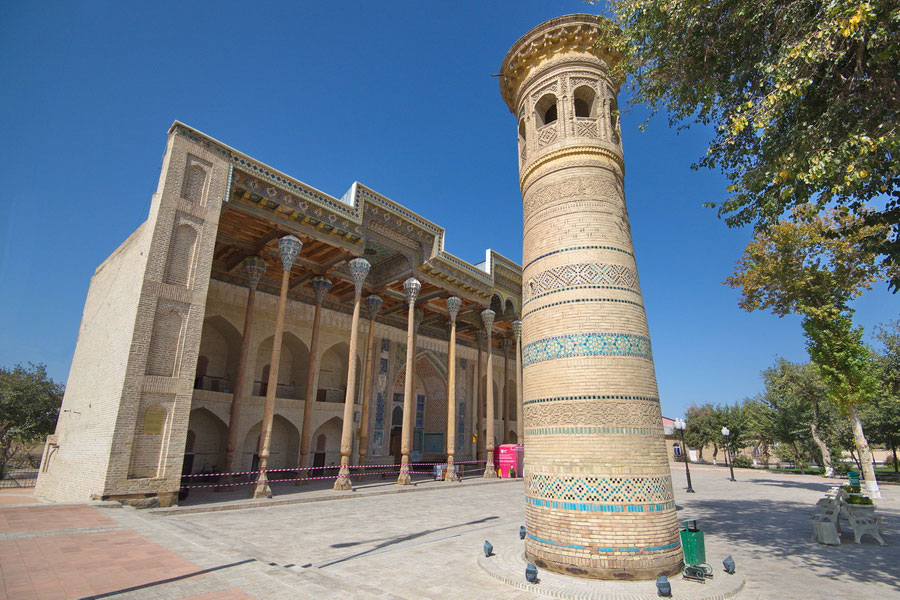
The Bolo-Khauz mosque is the only monument that has retained its initial appearance on Registan square. It is opposite the citadel Ark. This mosque includes the water tank, the Friday mosque and the minaret. The oldest part of the complex is the reservoir “khauz” (meaning in Uzbek “basin”), which is called Bolo-Khauz. In the past, these reservoirs were the source of water for the population and unfortunately a source of many diseases. That’s why most of them have been emptied. The Bolo-Khauz mosque was built in 1712 by order of the wife of the Emir of Bukhara. The other legend says that Emir Shakhmurad (1785-1800) built it for public prayers, because he liked to be among people. Despite the fact that at that time there was a decline in culture in the Bukhara Khanate, one of the most beautiful mosques in Bukhara was built. A wooden ceiling of aiwan (traditional veranda) which rests on refined columns is abundantly decorated with frills and adorned with floral and geometric ornamental motifs. A short minaret was built in 1917 by architect Usto Shirin Murodov, a famous artist from Bukhara.
Chachmai-Ayub well

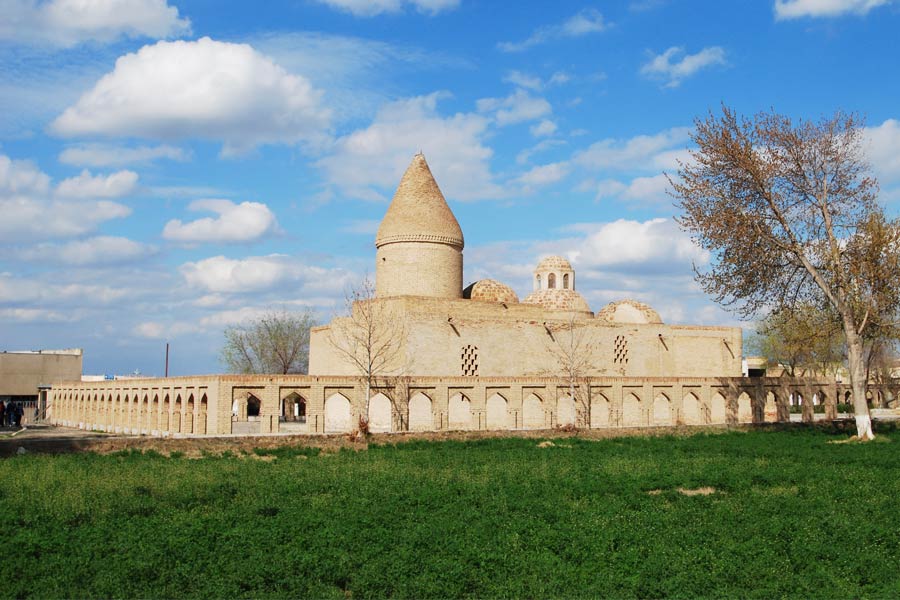
In Central Asia there are a large number of places which were probably visited by saints many centuries ago. One of them is the Chashmai-Ayub well, translated as the source of Saint Job (biblical prophet). A legend says that the prophet Job, after visiting this place, decided to help people who were suffering from water shortage in the desert. He struck the ground with his staff, causing a spring of crystal clear water to spring up there. Obviously people believe that the spring water is miraculous and has healing power. A mausoleum is erected above the source. It has the shape of an oblong prism. The building is crowned with cupolas of different shapes. Above the main building with the source there is a special double dome with a conical « hat ».
Samanid Mausoleum
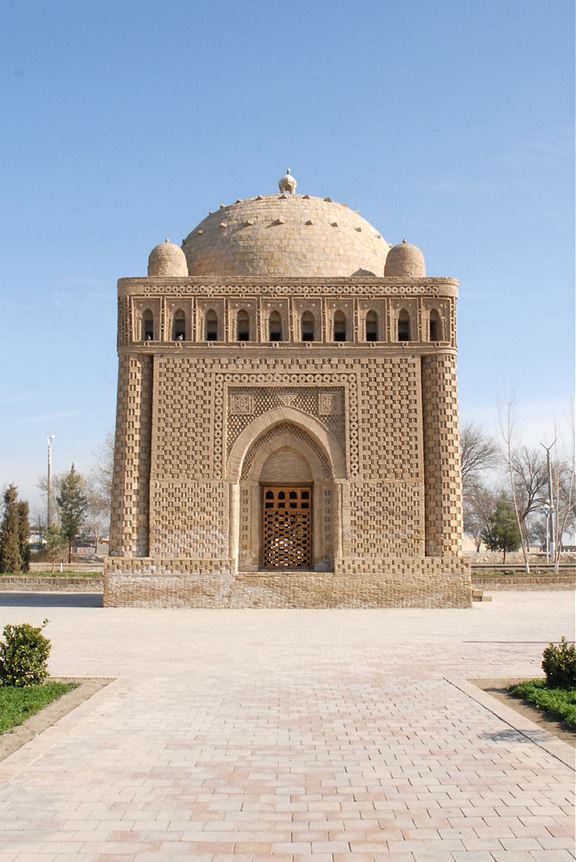

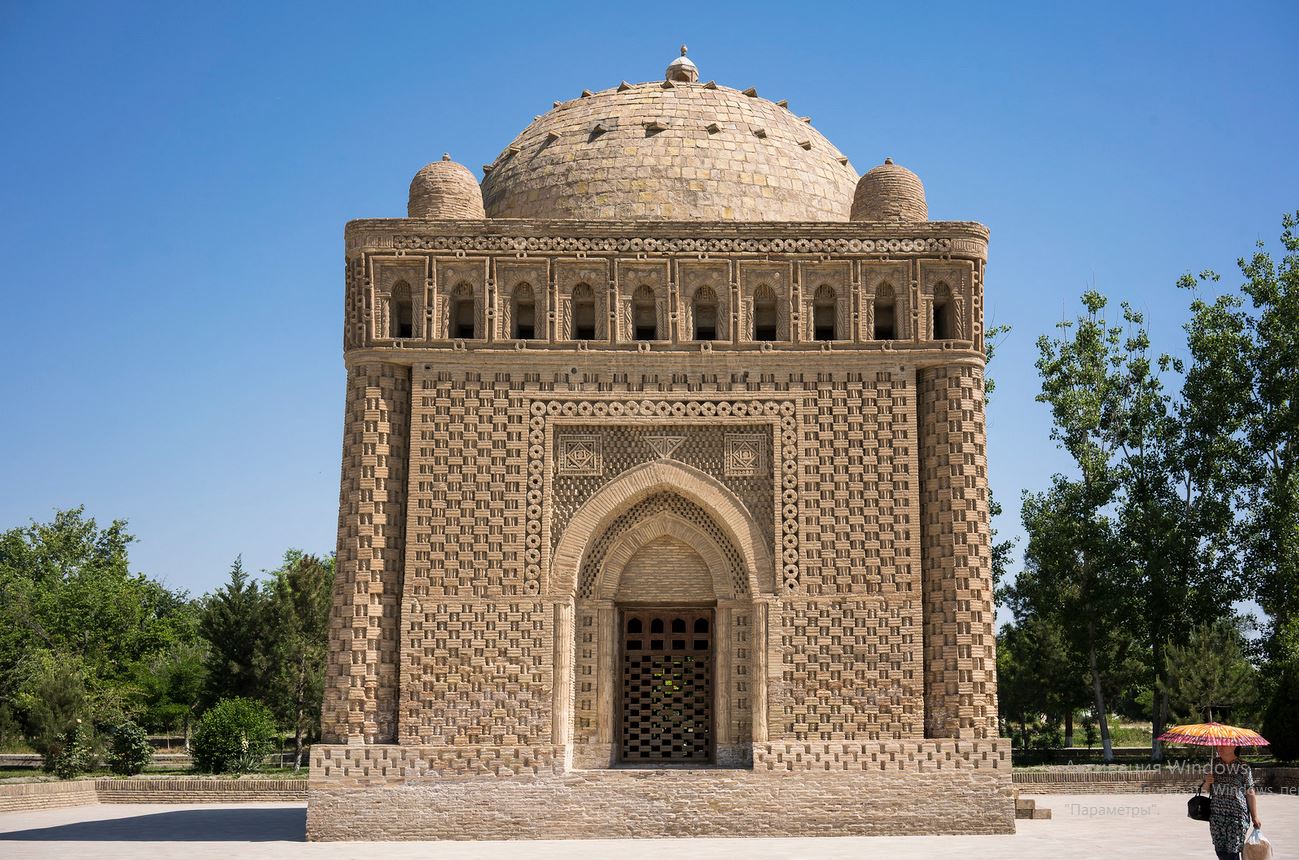

The impressive tomb of Ismael Samani is the oldest building in Bukhara, preserved in its original state. This brick cube was built at the end of the 10th century and belongs to the Samanid dynasty (875-999). This dynastic monument which received the name of the founder Ishmael Samani, also has the remains of other members of the family. The building consists of a cube, surmounted by a semi-spherical dome. The architecture of the mausoleum reflects the circular suns and the shape of the building representing the universe, a symbol of earth and stability. Simple volumes here: a cube that surmounts a sphere, a baked brick construction, three-quarter corner columns, a set of bricks of different sizes and volumes with a design allowing light effects on the facade. All this remains exceptional in the history of the architecture of Central Asia and Iran. The Samanid mausoleum is undoubtedly one of the most beautiful architectural gems in Central Asia.
Kosh Madrasa (the madrassahs of Abdulla-khan and Modari-khan)
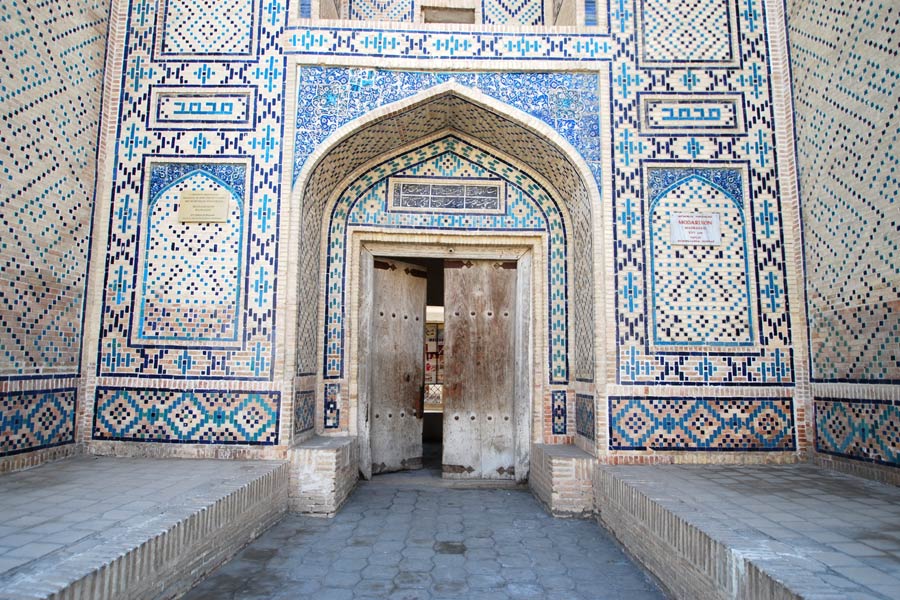
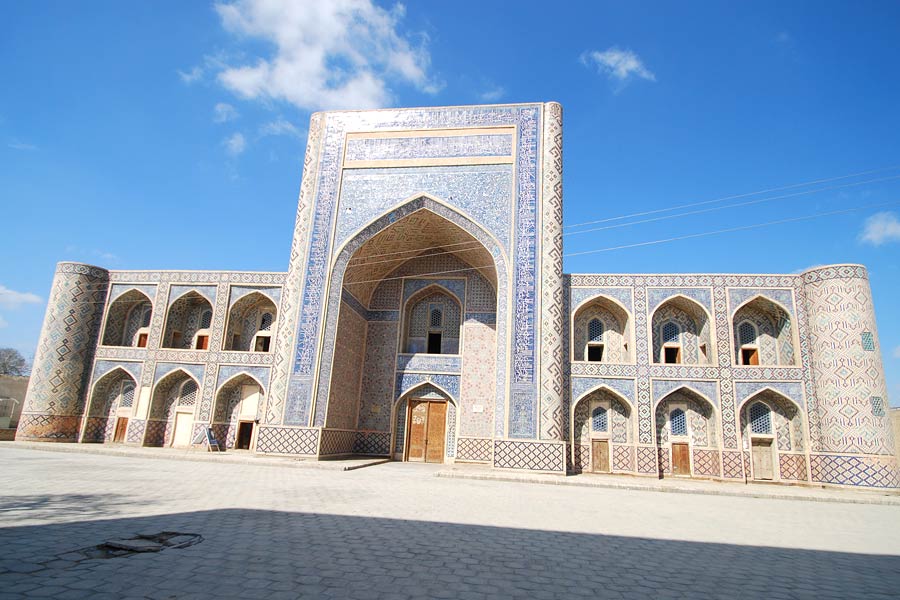

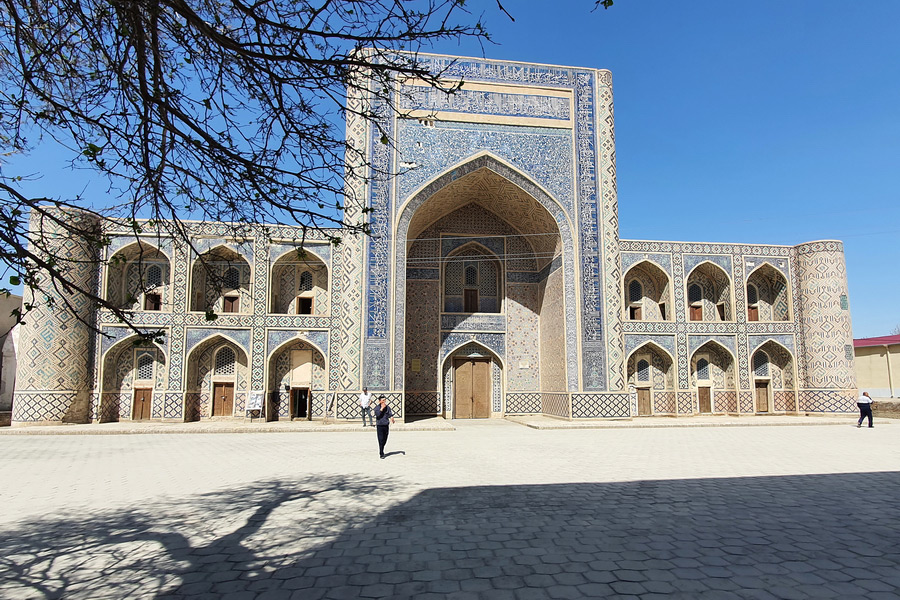
During the reign of Shaibanid – Abdullah Khan II (1557-1597), an architectural ensemble of two opposite madrassahs Kosh-Madrasa was erected in Bukhara. The first – Modari Khan was built around 1567 in honor of Abdulla Khan’s mother, the second is named after Abdulla Khan himself and was built in 1588-1590.
Sitorai-Mohi-Khossa Palace (summer residence of the Emir of Bukhara)

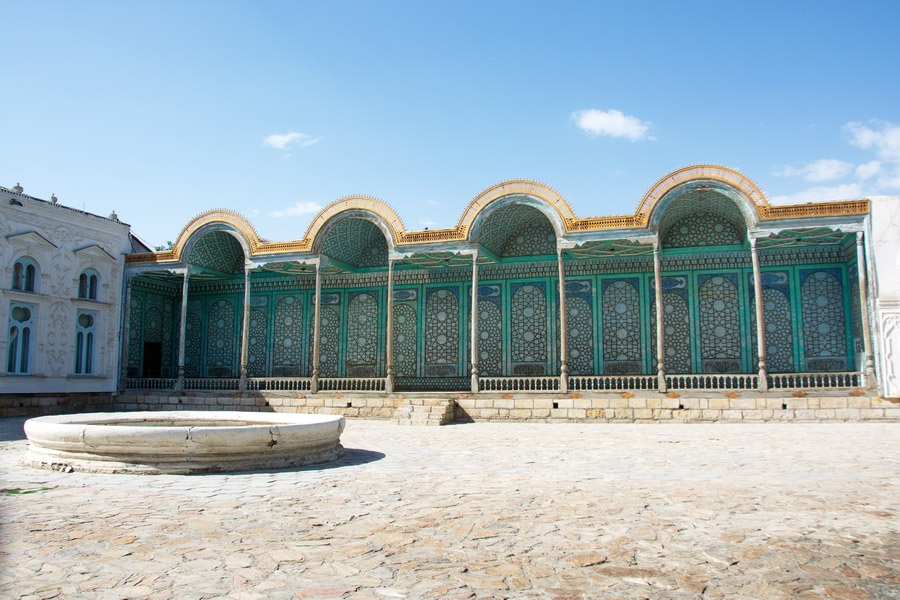
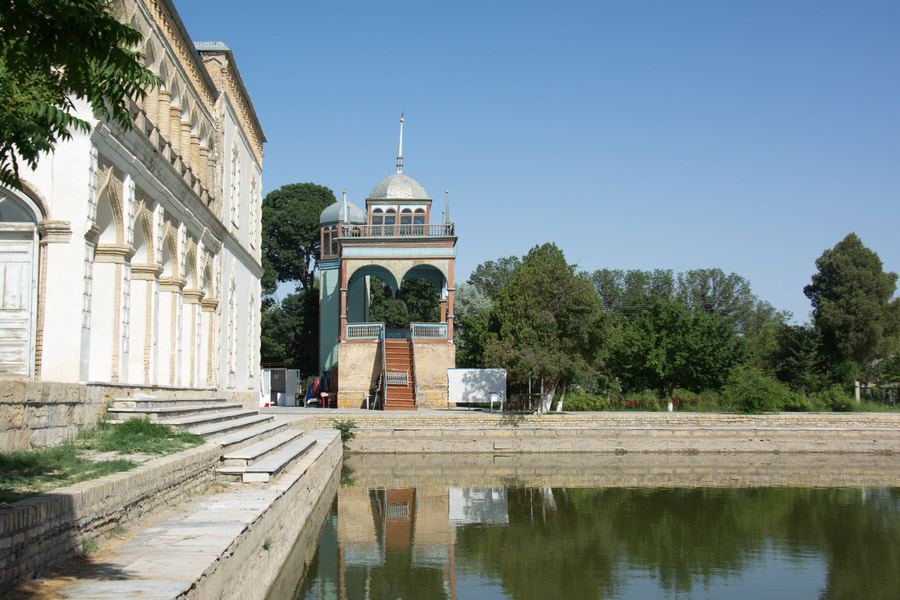
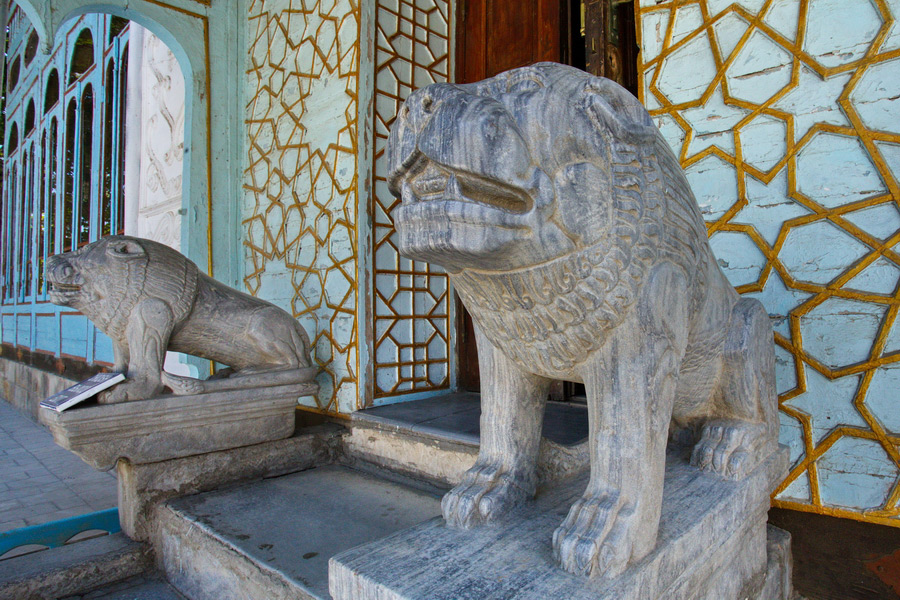
At the end of the 19th and the beginning of the 20th centuries, there was a great economic and cultural boom in Bukhara. At this time, interest in Western art increased, thanks to which art objects with unusual patterns for the East (cloths, porcelain), European books, magazines and other sources of the new information appeared in the country. Under the influence of this current of European culture, a new style was born, based on the interweaving of Western and Eastern motifs in all forms of art, especially in architecture. The most striking example of the synthesis of two cultures is presented by the summer residence of the emirs of Bukhara – Sitorai Mohi Khossa. Construction of the palace began in the 19th century, during the reign of Abdullahad Khan. Then a group of the best masters of Bukhara was sent to St. Petersburg and Yalta to get acquainted with new forms of architecture. The construction was continued in 1911-1918 by the last Emir of Bukhara – Said Alim Khan. Famous Bukhara craftsmen and Russian engineers participated in the construction of Sitorai Mohi Khossa (meaning – « Palace between the stars and the moon »).
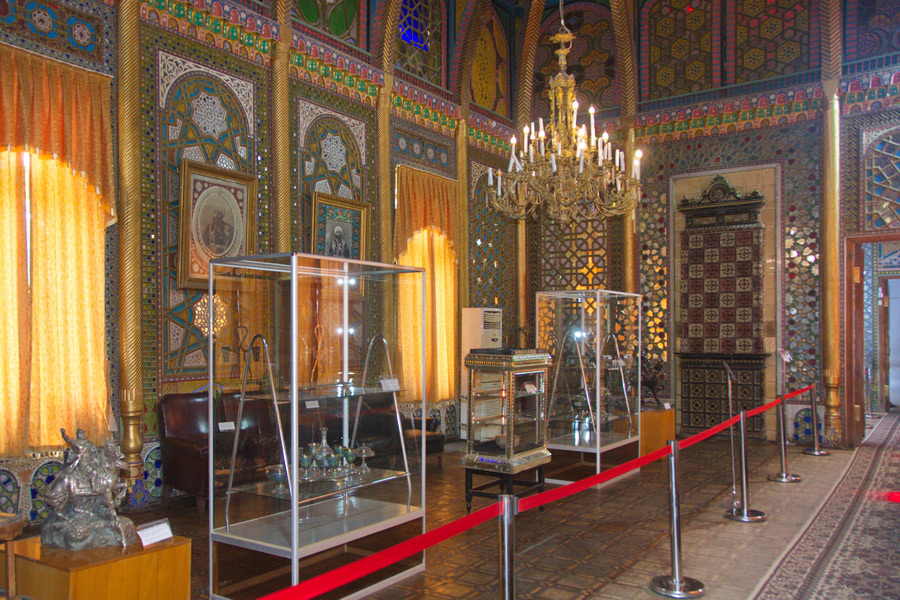
The architecture of the palace, its decoration and layout harmoniously combine the local style of historically established monumental and decorative art with the European style. The palace, like a traditional Bukhara house, is divided into male and female halves. The guest reception rooms are of particular interest. In Uzbekistan, the tradition of receiving guests in the most beautiful part of the house is still preserved. The famous « White Hall » was built under the guidance of the master artist – Usto Shirin Muradov. For two years, around thirty craftsmen worked on its decoration. The finest ganch (carved stucco) carving, painting, countless mirrors have been used in the decoration of the room, which has created a unique space that can immerse you in the world of fairy tales and dreams .
The summer tea room deserves special attention. Unlike the other halls of the palace, decorated with floral motifs, it is decorated with multi-colored geometric ornaments and colored glass. The rapprochement of the East and the West, in Sitorai-Mohi-Khossa is felt at every step. Here, the Gardens of Eden rub shoulders with Venetian mirrors, European furniture with traditional niches for crockery, the play of the sun’s rays at dawn, with the light of massive chandeliers, at night. The emirs of Bukhara, like European monarchs, valued solitude and closeness to nature, which is why the palace was built four kilometers from Bukhara. On the territory of the palace there is a beautiful garden and khauz, where you can hide from the scorching sun on a summer day in Bukhara. Today, Sitorai-Mohi-Khossa, is a museum of decorative and applied arts, where you can get acquainted with the history of Bukhara and the life of the inhabitants of the palace.
The Chor-Bakr necropolis
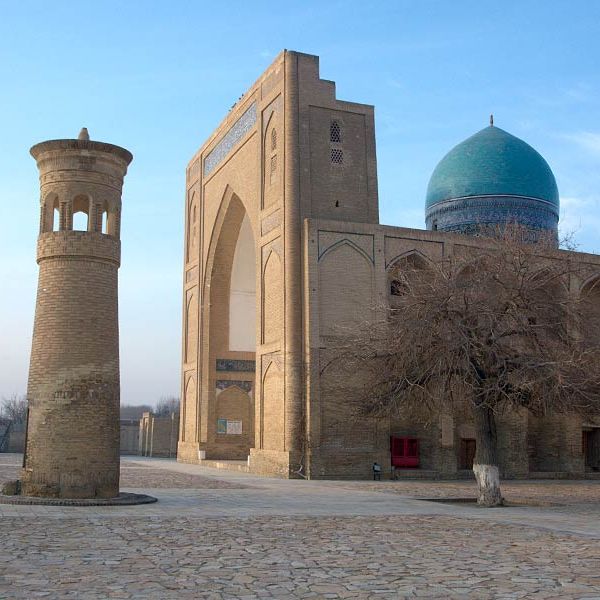
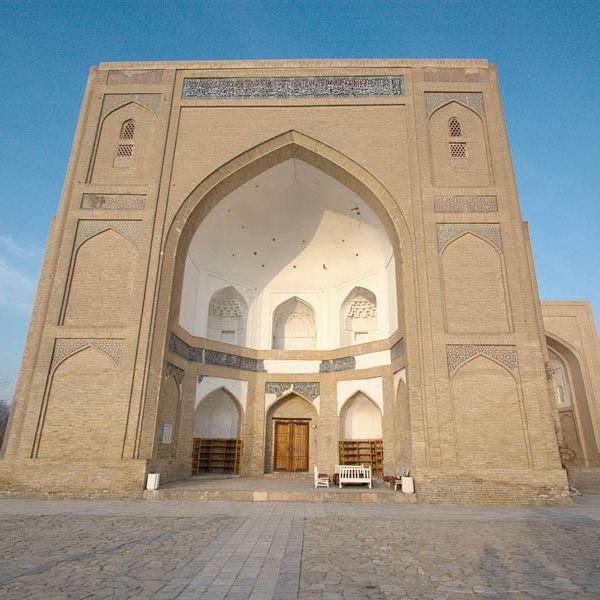
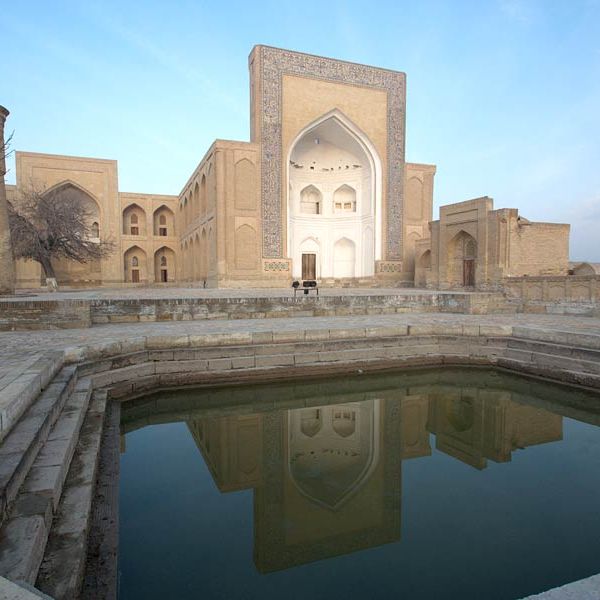

« Noble » Bukhara and its surroundings have attracted theologians, ascetics, dervishes and itinerant people seeking spiritual renewal for centuries. In the 10th century, in Sumitan, not far from Bukhara, a descendant of the prophet, a well-known muhaddis and faqih, Abu Bakr Sa’d, settled. This recognized jurist was famous for his enlightenment and wisdom, therefore, even after his death in 970, pilgrims continued to come to Sumitan to honor the saint’s memory and visit his tomb. Subsequently, the descendants of Abu Bakr Sa’ad – his son Abu Bakr Ahmad, a famous Sufi, as well as powerful sheikhs of the Djuybars, were buried in the mazar (cemetery). The Chor-Bakr necropolis was gradually formed. The Djuybars acquired a particular influence in the 16th century. Sheikh Khodja Djuybari was the mentor of the ruler of Bukhara – Abdulla-khan II, his advice was highly appreciated at court. Djuybars participated in diplomatic and trade missions, formed state policy, actively engaged in charitable and educational activities.
In 1560, Abdulla-khan II built a mosque, a madrassah and a khanaka in Chor-Bakr to honor his mentor. Nearby, by order of the ruler, a garden was laid out, where, in addition to fruit trees – cypresses, willows, pines, plane trees and fragrant roses were planted. But in 1563, Khodja Djuybari died. The memory of this mournful event has been preserved, « his body was wrapped in a shroud of several layers of Byzantine cloth, then in a special cloth from Yemen and in a shawl from Kashmir », according to the will, the Sheikh was buried next to the tomb of Abu Bakr Sa’d, from this moment Chor – Bakr becomes the family tomb of the Djuybars.
The architectural ensemble of the complex includes religious buildings, a madrassah and a minaret built at different times. The necropolis is a real city, with courtyards and streets. Instead of traditional mausoleums, in Chor-Bakr there are khaziras, burial structures, in which there is no roof over the burial. Above the tombs are dakhmas and sagans, which recall the area’s Zoroastrian past. The necropolis enjoys special attention among women who come to the dakhma of Khodja Sa’d to pray for the healing of their children. As a thousand years ago, pilgrims and the suffering rushed to Sumitan to strengthen faith, heal the soul and find the meaning of life in the silence of the mazars of Chor-Bakr.
Bahovaddin Nakshbandi Complex


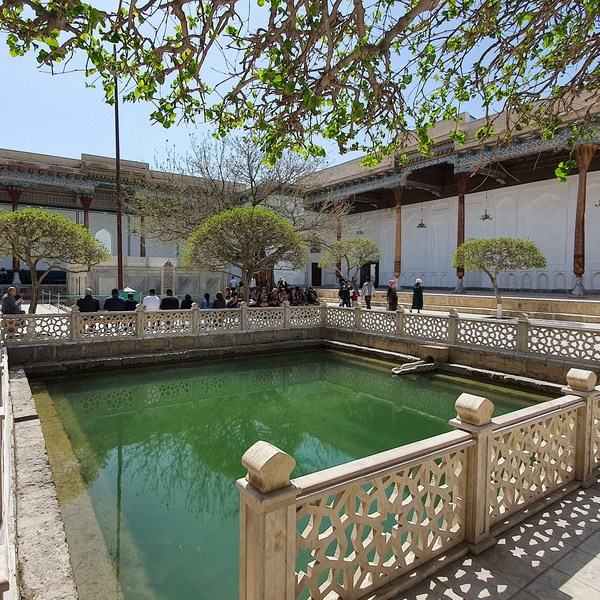
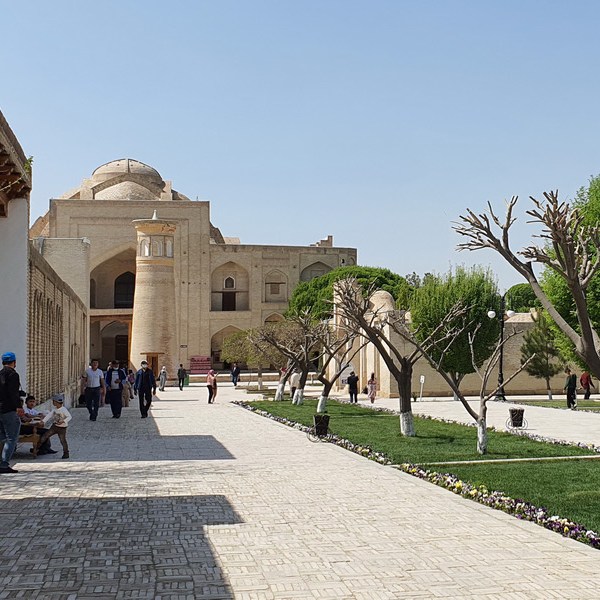
Khodja Bakhovaddin Naqshbandi memorial complex is one of the most important shrines of Muslims. Every self-respecting Muslim knows and reveres this name. The great 14th century theologian, founder of the « Naqshbandia » Sufi order, was buried 12 km from Bukhara in his native village of Kasri Orifon. Some time ago there was the pagan temple of the site of the current Naqshbandi tomb. It is known that Naqshbandi was the spiritual master of Amir Temur (Tamerlane) and made hajj (pilgrimage) to Mecca 32 times. He asked people to be modest and rejected luxury. His philosophy was based on the principle: « Dil ba khudo, dast ba kor » (« The heart is with the God, the hands are at work »).
The main building of the complex is the khanaka. In front of the facade of the mosque are the minaret and the small madrassah. To the west of the dahma, in a separate courtyard, is the large necropolis where Naqshbandi is buried. The graves of his mother and his teacher – Said Mir Kulol, are located not far from his grave. The Mausoleum of Saint Bakhovaddin Naqshbandi is considered the Mecca of Central Asia. Believers from different Muslim countries come here to seek fulfillment of their wishes and healing. The complex also includes the museum which keeps the true information about Sufism, Sufi clothes, books and other exhibits.
Madrassah Chor-Minor
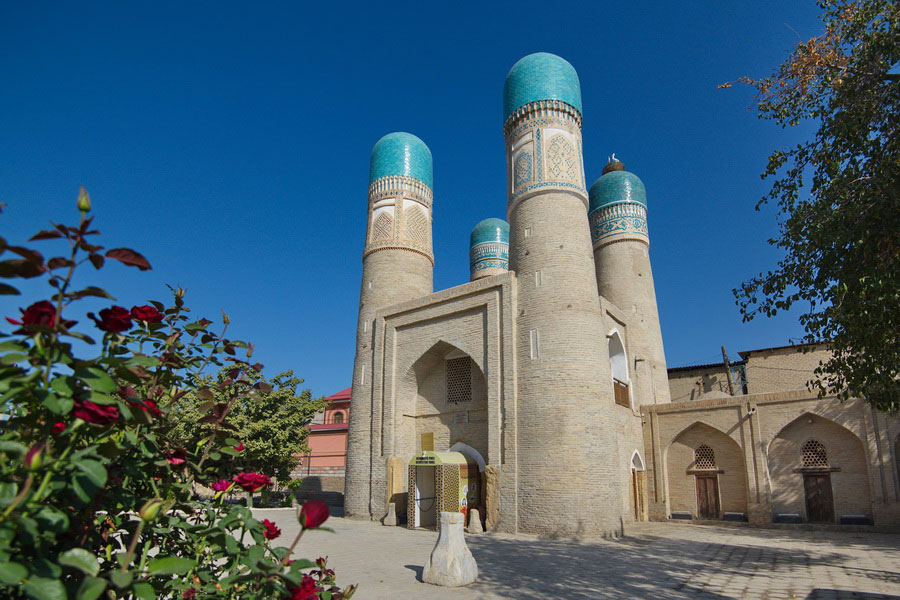


Speaking about the unusual monuments of Bukhara, first of all we should highlight the Chor-Minor madrassah. It is located just behind Lyabi-Khauz, in the open space. « Chor-Minor » translates as « four minarets ». This name is well justified: the corners of the building of the madrassah, rectangular and square in shape, are actually decorated with four small minarets crowned with blue domes, the decorations of which differ from each other. Each of the four minarets has a different shape. The decorative elements of the towers are meant to reflect the philosophical and religious understanding of the four world religions. At least it is easy to see that some elements look like a cross, a Christian fish and the Buddhist prayer wheel.
In front of the madrasah building there is a patio with a small central pool – khauz, lined with stone blocks and several khujras (cells) adjacent to the sides of the madrasah. The madrassah is a well-preserved building, erected on the money of the rich Turkmen Caliph Niyazkul. The date of construction of the madrassah building which refers to the year 1807 must be clarified because according to archival documents, the madrassah of Caliph Niyazkul already existed at the end of the 17th century.
The domes of the merchants (Saroffon, Telpak-Furushon, Zargaron, tym of Abdulla-khan)
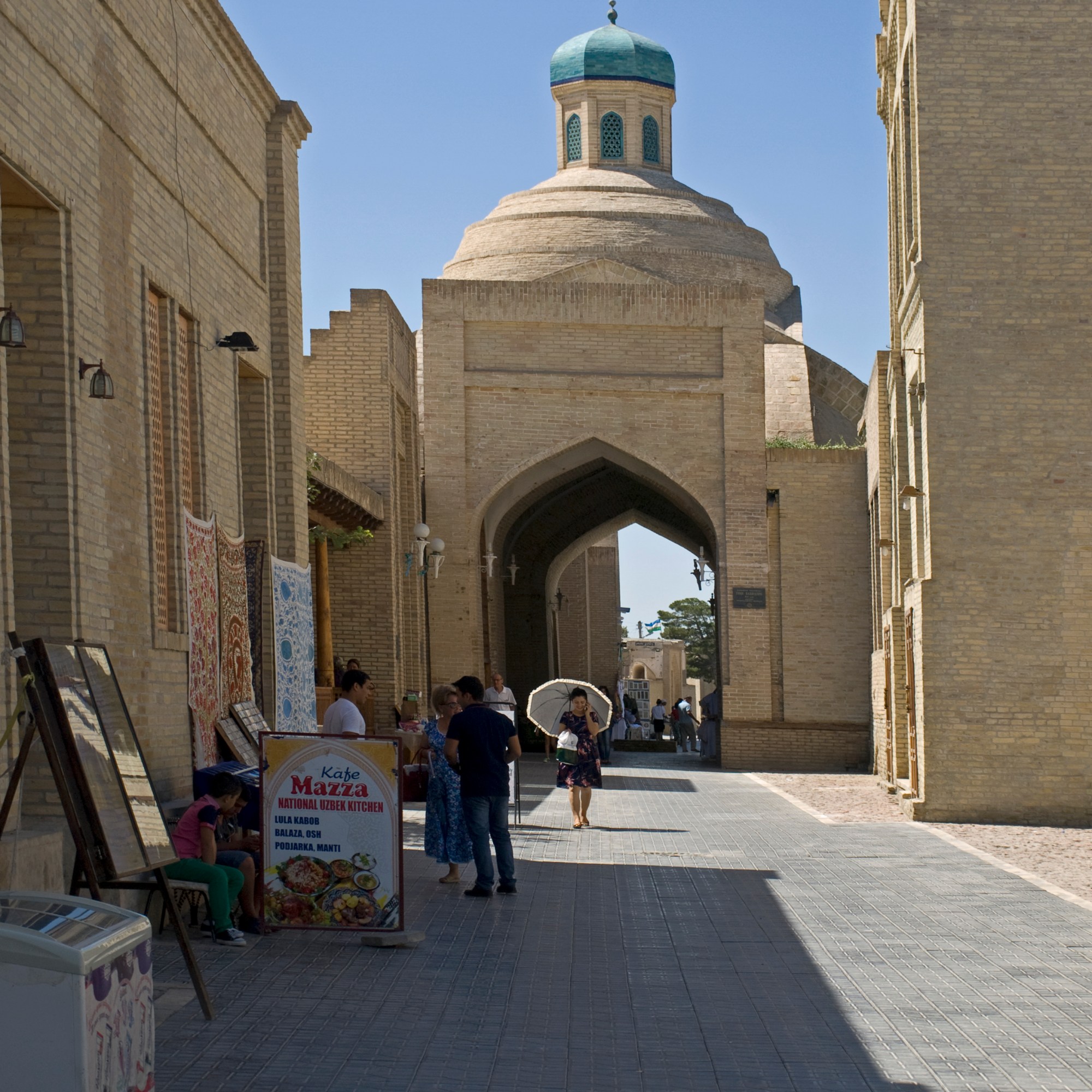
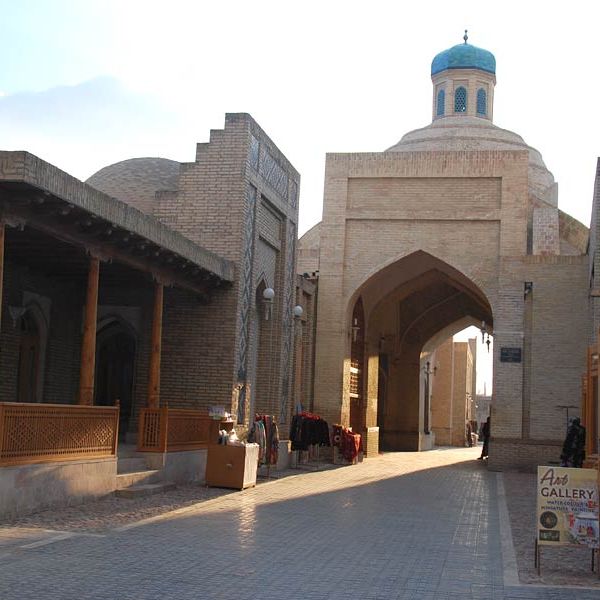
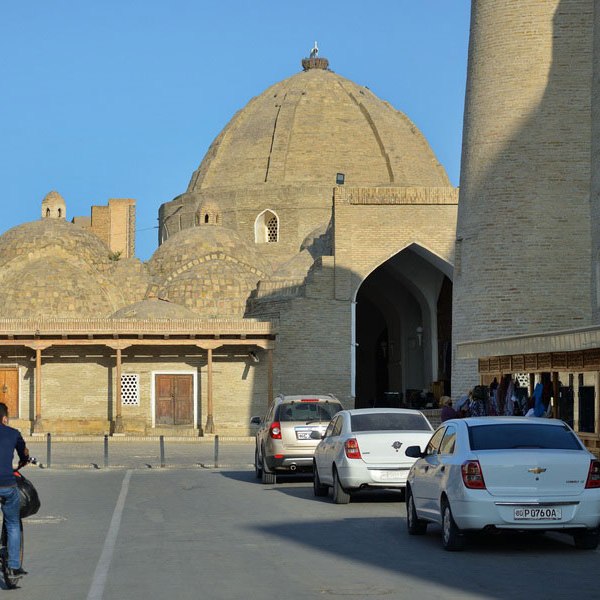


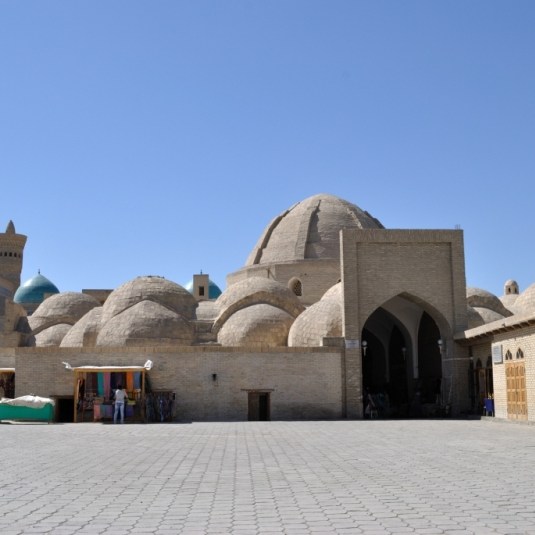
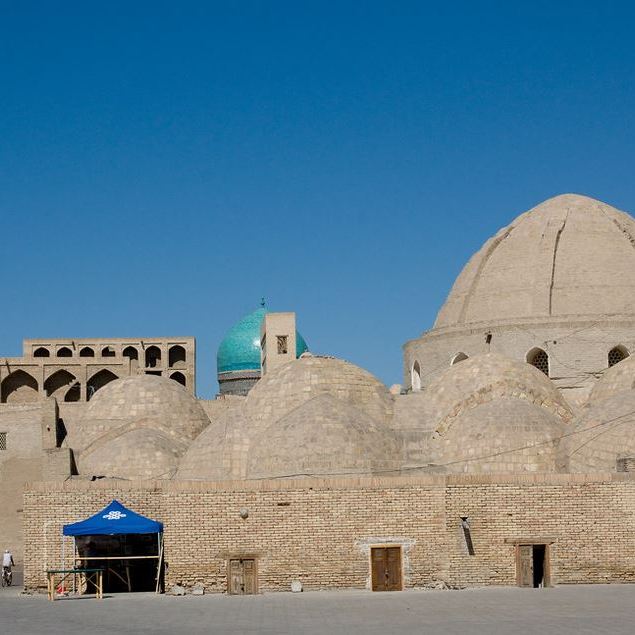
Medieval Bukhara was a great trading city that hosted merchants from all parts of Central Asia, Iran and India, Russia and China. Bukhara’s commercial status was reflected in the city’s planning and development. The main streets in the center served as bazaars, each selling a certain type of product. For their improvement, complex multi-vaulted domed ceilings were erected on squares and street intersections, called « tok » (one arch, one vault). Three of these structures have been preserved: Toki-Zargaron (the jewelers’ dome), Toki-Sarrafon (the money changers’ dome) and Toki-Telpak-Furushon (the hat merchants’ dome).
These « Tok » domes, built in the 15th-16th centuries, blocked the intersection of streets, directed traffic, unloaded the main road and organized trade. They housed shops and workshops around the central space under the dome. In terms of architectural type and purpose, the Tim of Abdulla-khan adjoins the Tok domes. It is a large, multi-domed commercial building designed for the sale of silk. In the center of the tym, under the main dome, is a large market. It is surrounded by a gallery of 56 sections of shops covered with domes.
 Voyage Wonder