
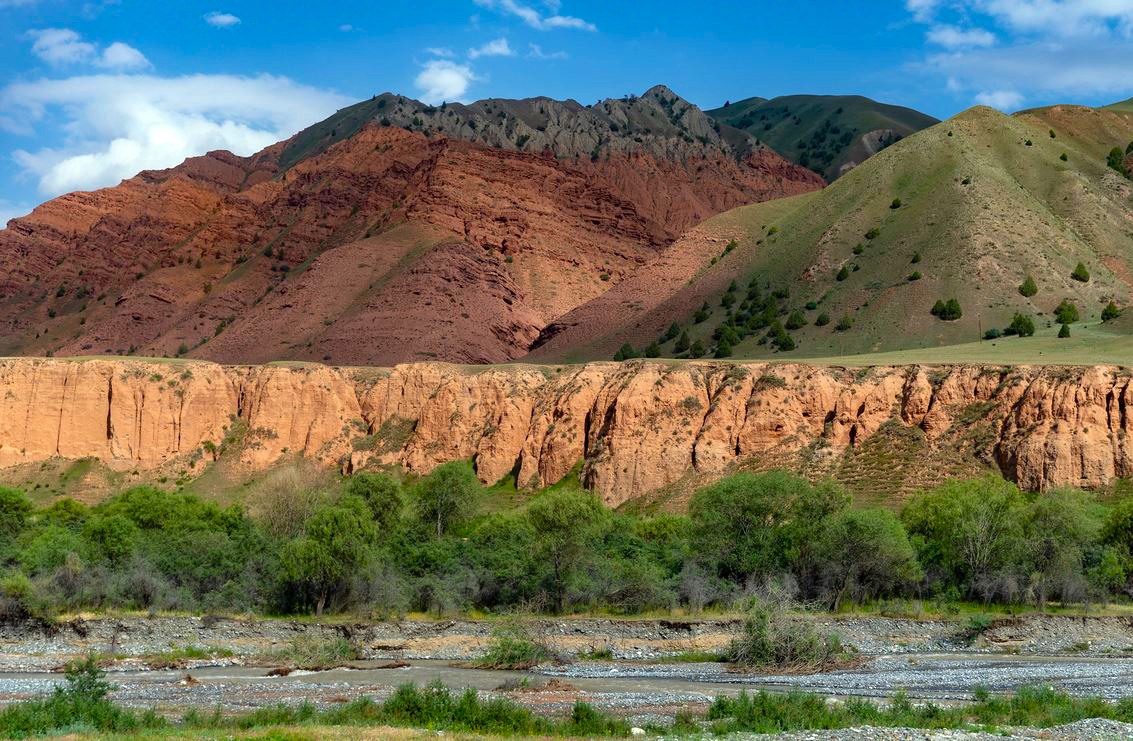
The Fergana Valley is a golden valley with more than 7 million people living in this fertile alluvial plain, covering an area of 22000 km². It is one of the most beautiful places in Uzbekistan. It is watered by the waters of the Syr-Darya and Naryn rivers and surrounded by the Tian Shan mountain range. The valley is famous for its cities like Andijan, Fergana, Margilan, Kokand, Rishtan, Shakhimardan and Kuva.


Sights and attractions of Fergana
Andijan
The region lies to the northeast, surrounded by mountains and hills. The hills of Andijan and Alamish are rich in oil, gas and other natural wealth. The city has been known since the 9th century A.D. Andijan is today one of the important industrial cities of the country. The region is strategic for its automobile production in cooperation with General Motors (formerly Korean Daewoo). Andijan was a center of the Silk Road trade, linking China to Central Asia. The city had many caravanserais all along the bank of the Karadarya River.
Kokand
Kokand owes its name to the powerful khanate (principality) whose power extended from the Fergana Valley to Tashkent and the Kazakh steppes in the 19th century. Kokand was the capital of the khanate and the religious center of the valley. The town has a number of historic buildings dating back to the 19th century.
Khudayar Khan Palace

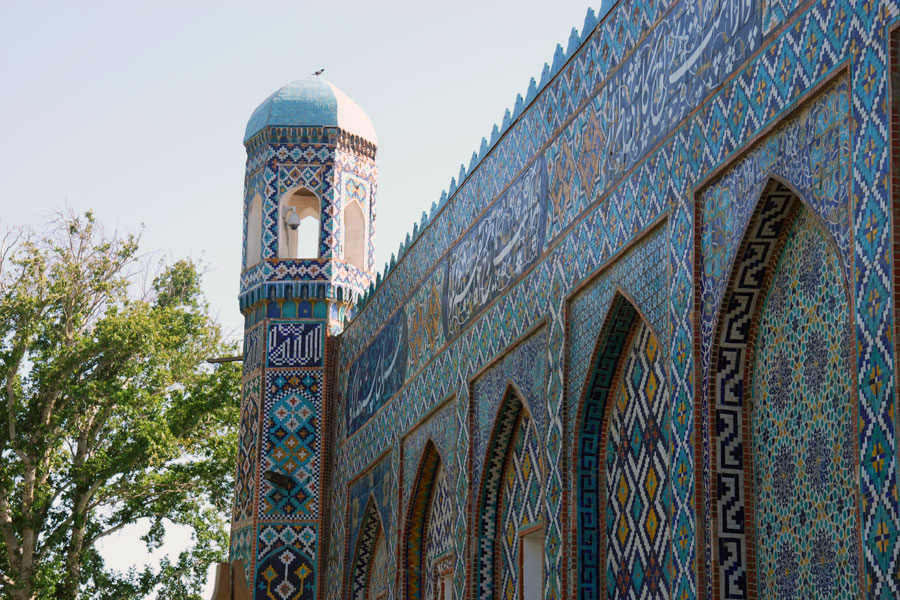
The palace of the last ruler of the Kokand Khanate Khudayar Khan – is a pearl of the city of Kokand. This magnificent Urda palace was built in 1871 in the tradition of Central Asian architecture with a high entrance portal and four minarets at the corners, two of which stand on two sides of the facade. The total area of the palace is 4 hectares, its foundation is raised by 3 meters. For this reason, a ramp has been added to access the main entrance. The width of the entrance gate is 70 meters. In the upper part of the darvozakhona (entrance gate), it is written in Arabic letters: « Said Muhammad Khudayar khan The Great ». In its original form, the palace was 138 meters long and 65 meters wide. The palace consisted of 7 small palaces and 119 rooms. At that time, « Urda » was surrounded by internal and external fences. The fences have not been preserved to the present day, and only 2 courtyards and 19 rooms remain.
Norbuta Biy madrassah
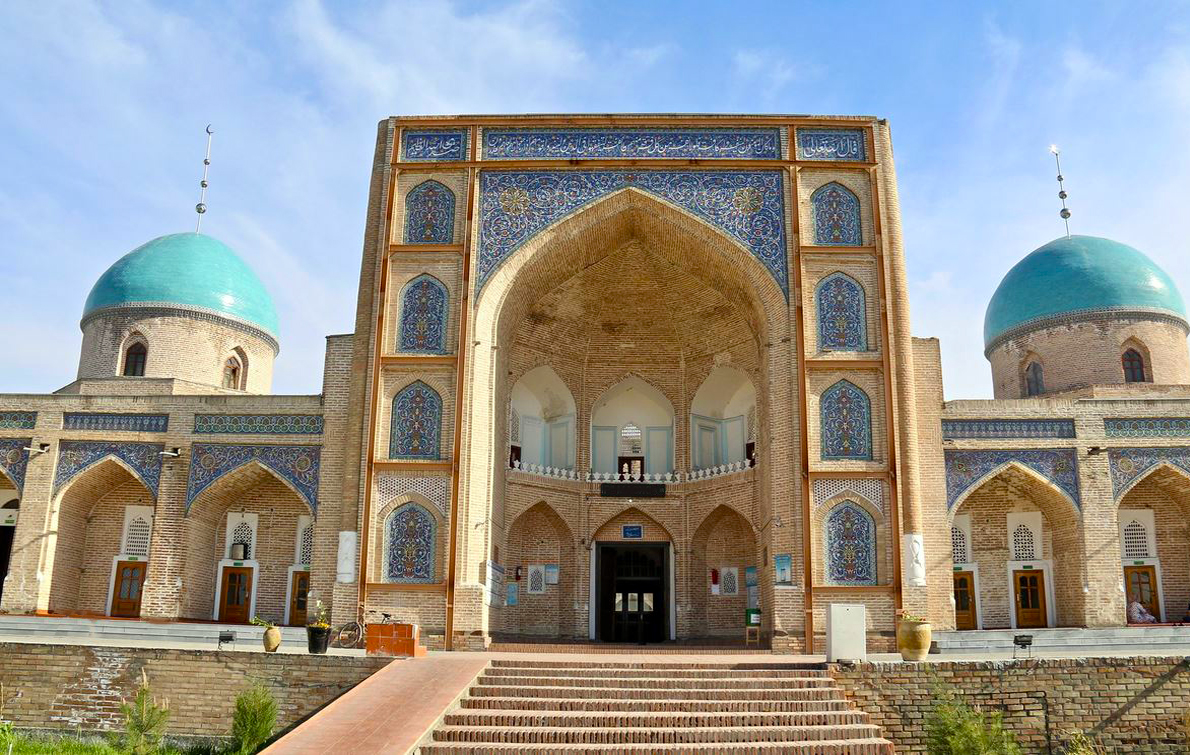

Madrassah Norbuta Biy was built on Chorsu Square with the participation of Bukhara builder and stucco sculptor Usto Kasimjan. Although the building is one level, it is a very monumental construction. In the 19th century, the madrassah was the largest center of knowledge in Kokand. There are many study and living rooms (khujras) for students. The dimensions of the madrassah are 52 by 72 meters. In the construction of the madrassah were mainly used fired bricks. Today this building houses the Djami mosque. After the independence of Uzbekistan, this madrassah was reopened and now more than 80 students study there.
Modari Khan mausoleum

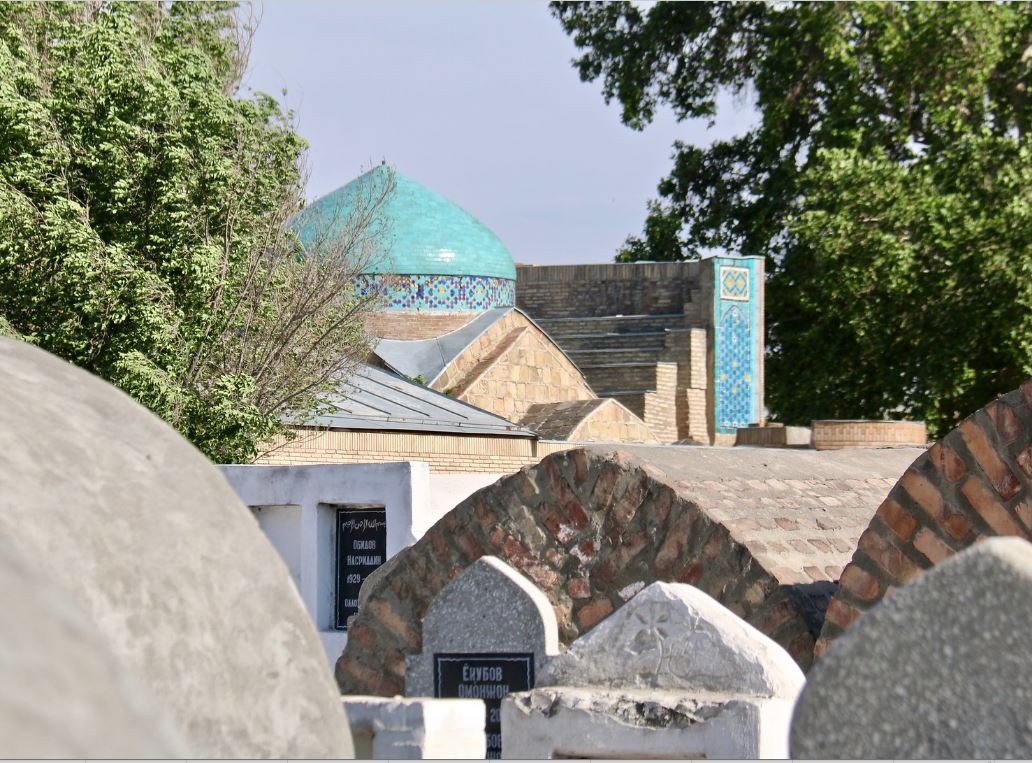
The Modari Khan Mausoleum was built for the mother of the ruler of Kokand – Umarkhan in 1825, who rests under a blue dome. This monument is one of the very interesting examples of Muslim architecture in Central Asia.
Djami mosque

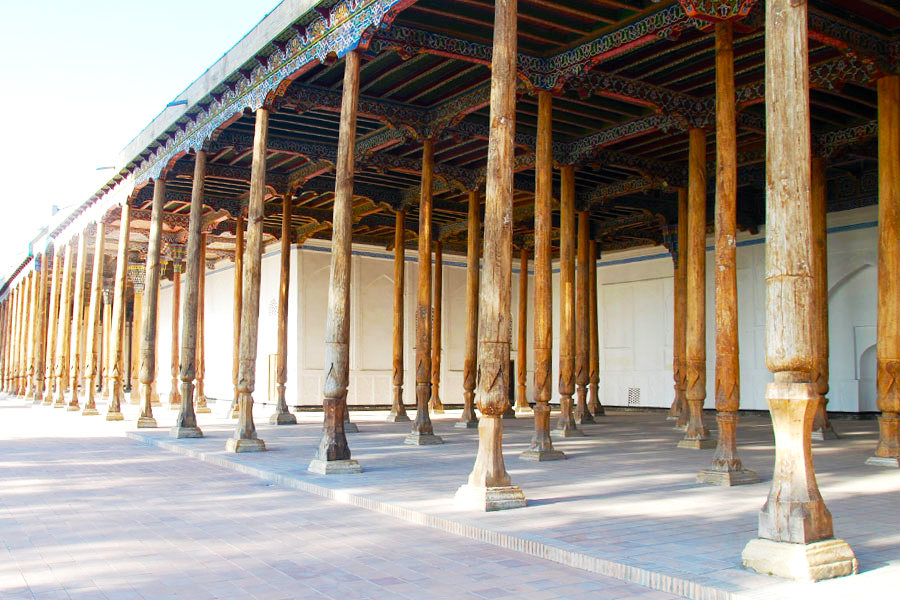
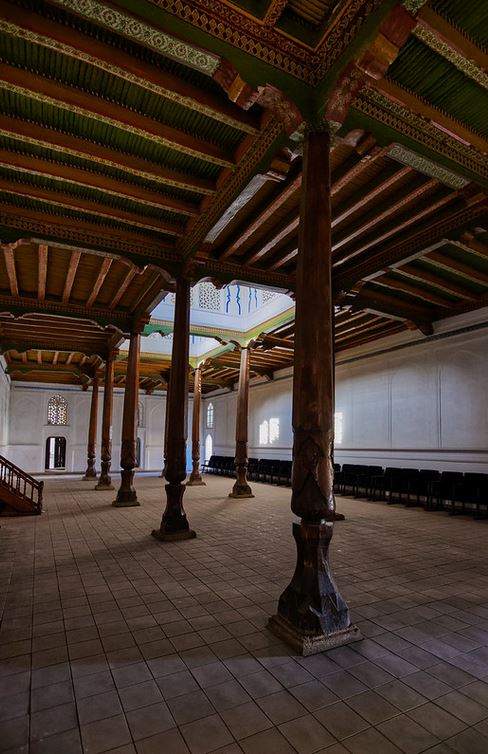

The mosque was built during the reign of Umarkhan (1809-1822). Friday prayers were mostly read here. It was an extended aiwan closed on three sides with a khanaka (closed room) in the center. The dimensions of the mosque’s aiwan are 97.5 by 25.5 meters, which is supported by 98 wooden columns. These columns are made of solid wood, which is why they are called « stone trees ». In front of the mosque there is a minaret with smooth circular masonry of baked bricks and a six-arched lantern crowned with a faceted dome. Its height is 22 meters. Every day, 5 times at the same time, from the top of the minaret, the townspeople are called to prayer by the muezzin.
Dakhmai Shakhon necropolis


Dakhmai Shakhon – is a tomb of the khans of Kokand which was built in the time of Umarkhan. The set consists of three parts: a hall with a portal, a mosque-aiwan and a family cemetery. The tomb is surrounded by a fence, there is an aiwan for prayers and several tombs, in one of which Umarkhan himself is buried. The facade of the Mausoleum of Umarkhan (1809-1822) and the columns of the Summer Mosque resemble in their decoration the painting of the Bolokhauz mosque in Bukhara. The entrance doors to the tomb are decorated with wood carvings with extracts from the Quran in Arabic and samples of Umarkhan poetry. The area of the tomb is 9.4 by 11.7 meters. In 1971, this architectural building was restored by local craftsmen.
Margilan
The city was an important stop on the Silk Road. Margilan is the production center of millions of meters of silk fabric every year. There are a few madrassahs and mosques.
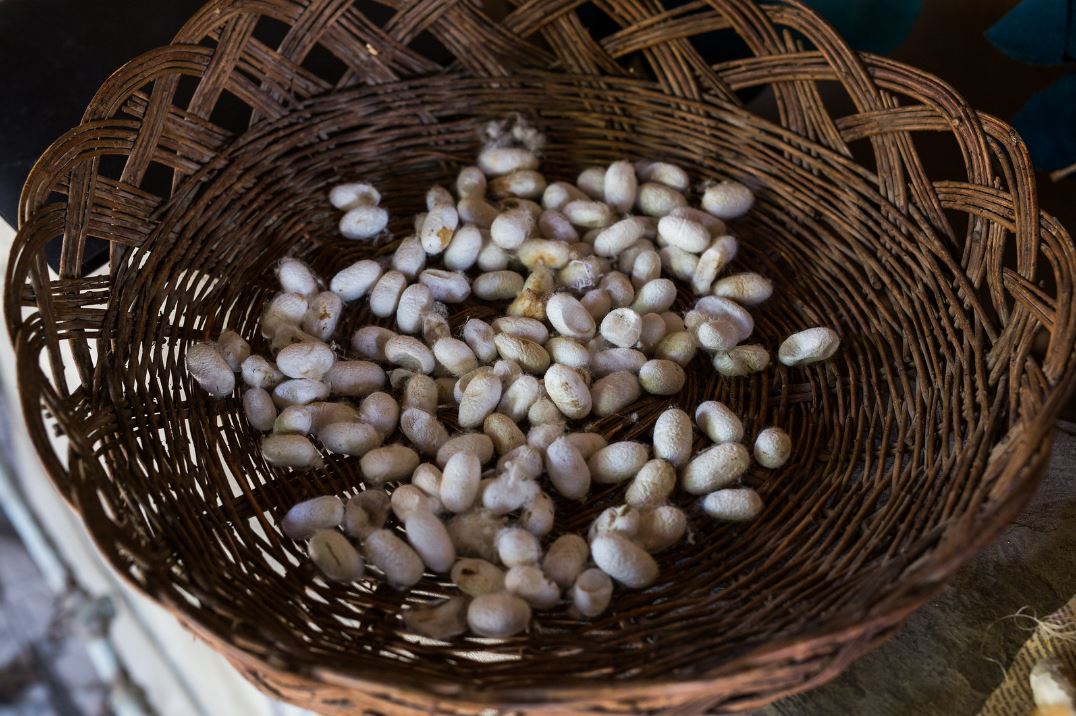


Margilan is one of the oldest cities in Uzbekistan. It is located in the Fergana Valley a few minutes from the city of Fergana. The city was famous in the Middle Ages because it produced the best silk in Central Asia, which could rival Chinese silk in quality and beauty. Caravans with silk from Margilan went on the Great Silk Road to Kashgar, Baghdad, Khorasan and even Greece. Silk appeared in Central Asia in the middle of the 2nd millennium with the beginning of the development of the Great Silk Road. A legend says that a ruler of Fergana ordered his servants to learn a secret of Chinese masters’ skills in silk weaving, which caused a war between the two countries.
The Uzbek khan-atlas is almost entirely handmade. For almost 1000 years the masters of Fergana have managed to develop their own unique technique and technology of weaving threads from cocooning and dyeing threads that make Margilan silk one of the best in the region.
Rishtan
Rishtan is a small town located only 60 km from the city of Fergana. This city is famous for its traditional ceramics of Uzbekistan. Construction of the International Ceramics Center in Rishtan began in 2020. The city, home to hundreds of artisans producing unique blue ceramics, has never had such a unifying center before. The designer of the project was the famous ceramist from Rishtan, Alisher Nazirov. At the end of 2020, 20 workshops, each with two floors, were built on the territory of the center. None of the workshops follows the model of another – the style of each master is unique here. There is also a museum on the history of Rishtan and a guesthouse for tourists. Rishtan is a real oriental fairy tale that will not leave anyone indifferent. Be sure to visit the workshops of renowned ceramists Rustam Usmanov and Alisher Nazirov.


Kuva
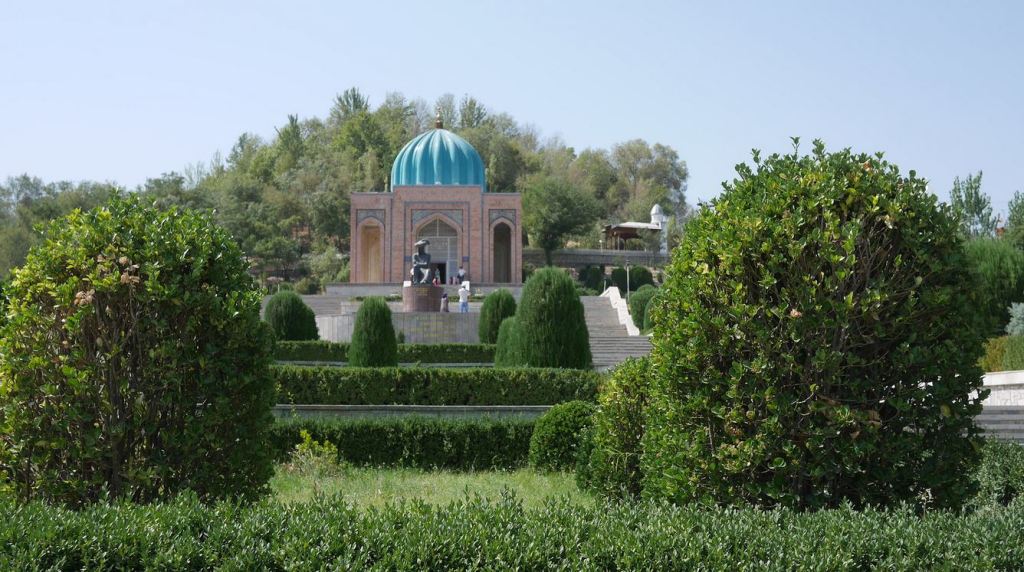
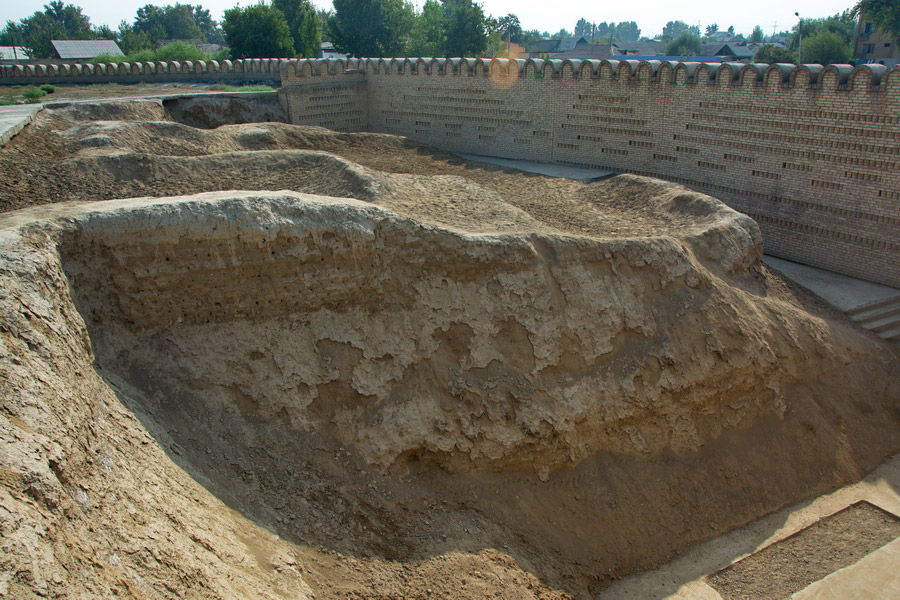
The city is known by the memorial complex of al-Fergani, the scholar of the Middle Ages, known as Alfaraganus in Europe. Also, archaeological research has been done for decades to find antiquities in the city of Kuva.
 Voyage Wonder