

The Autonomous Republic of Karakalpakstan is located in the northwest of Uzbekistan. The desert occupies more than 80% of the territory of the republic. The Karakum Desert joins Karakalpakstan from the southwest and the Usturte Plateau lies to the northwest, the Kyzylkum Desert is to the northeast. Karakalpakstan also includes the northern half of the Aral Sea, at the dry bottom of which the new Aralkum salt desert now forms.
Despite the ecological problems, the nature of this place is unique. According to the geological research of the soil, the researchers came to a conclusion that the territory of the deserts was previously the bottom of the great sea. Even today one can find the remains of the flora and fauna there, as well as the remains of the animals of sea in the Cretaceous and Cenozoic times.
Traveling to Karakalpakstan you can see not only incredible natural landscapes, but also visit the ruins of ancient monuments and those of the Middle Ages, because the territory is like « the park of archaeological reserves ». At present there are more than 300 archaeological works. Previously, the territory of Karakalpakstan together with the Khorezm region and the adjacent regions of Turkmenistan composed a united state of Khorezm and was the area of influence of Zoroastrianism and the holy book Avesta.
In Karakalpakstan there are the historical monuments of ancient Khorezm: Gyaour Kala (IV-III ss. BC), Toprak Kala (III – II ss. BC), Ayaz Kala (IV- II ss. BC) as well as the architectural ensembles: Naridjan bobo mausoleum (14th ss.), unique Maslumkhan Sulu mausoleum (14th-17th ss.) and the Mizdarkhan necropolis. The fragments with the oldest Khorezmian scripts were found during the archaeological excavations of Koy-Krilgan-Kala. Details of sculptures, frescoes, signatures are kept in the Karakalpakstan Fine Arts Museum, bearing the name of Savitsky.
Sights and attractions of Karakalpakstan
The Savitsky museum in Nukus
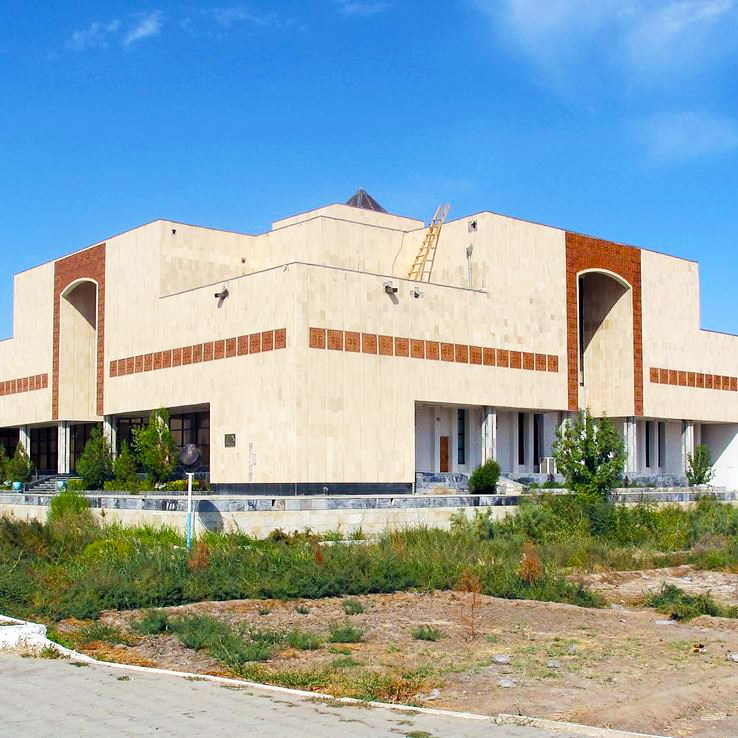
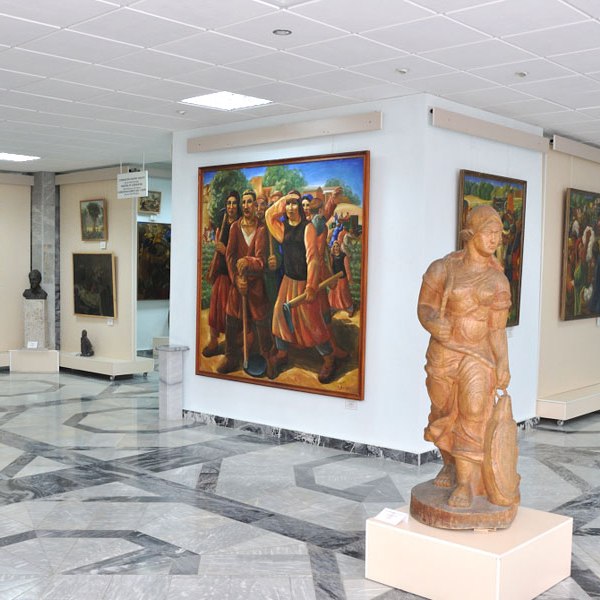

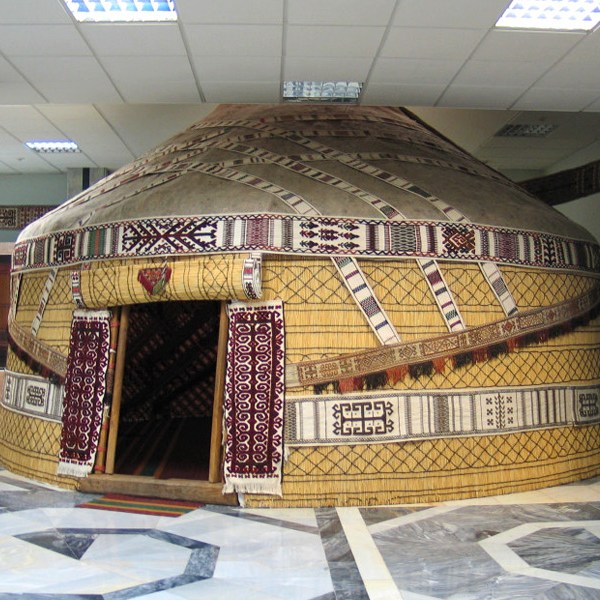
The Karakalpakstan Art Museum, established in 1966, is known beyond the borders of Uzbekistan for its exclusive collection of avant-garde Russian artists. Igor Savitsky used freedom as the director of a museum in Nukus, a city far from Moscow, to collect important works by Soviet artists who were dissatisfied with socialist realism. The new museum building in the city center was officially opened in 2003.
A special page in the history of the establishment of the museum is the collection of the fine arts department, which brought special and worldwide popularity. This department represents not only the national school of fine arts, which was formed under the influence of the museum, but also the works of artists from Uzbekistan of the beginning of the 20th century, the period of origin and formation of the local national school of fine arts, known as the « avant-garde of Turkestan ». Risking being categorized as a “public enemy”, Igor Savitsky collected banned works by painters who later received the name avant-garde. As a result he collected avant-garde works of 50,000 paintings from the post-avant-garde period of Soviet art. This is a bright group of Russian orientalists, the most complete representation of which is in Nukus, which arouses the constant interest of the viewer. The names of A. Volkov, U. Tansykbaev, Usto Mumin, N. Karakhan, M. Kurzin and others were recognized posthumously and entered into the history of world art.
The museum has small secondary collections of icons, antique furniture and decorative art. They are kept in warehouses. The museum library is one of a kind. It includes several collections of books by outstanding scientists T. Zhdanko, A. Gudkova, artists G. Sabaneeva, T. Gaponenko and many others.
Several rooms exhibit the gift of the widow of the French artist Fernand Leger & Nadia Leger. This is a top-notch collection of copies of world masterpieces, made in the workshops of the Louvre in Paris. The Karakalpakistan State Art Museum, which bears the name of Igor Savitsky, does not even yield to the world-famous Russian Museum in St. Petersburg or the Tretyakov Gallery in Moscow.
Any beauty lover, even the most partial, will feel the atmosphere of Parisian workshops and galleries, visiting the graphic design section in the exhibition of the two buildings of the museum. The fact that the museum displays only 3-5% of the entire collection will amaze visitors.
The Mizdarkhan necropolis


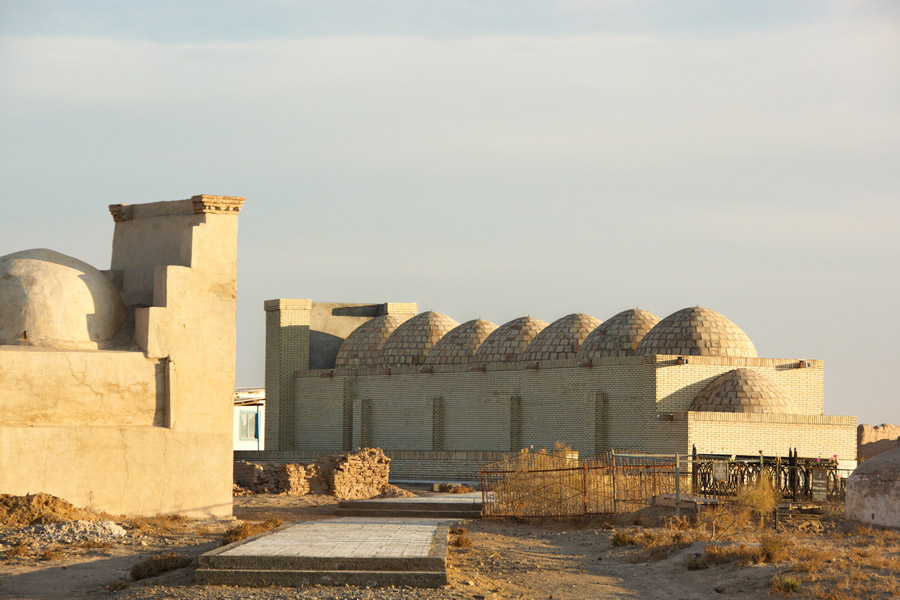
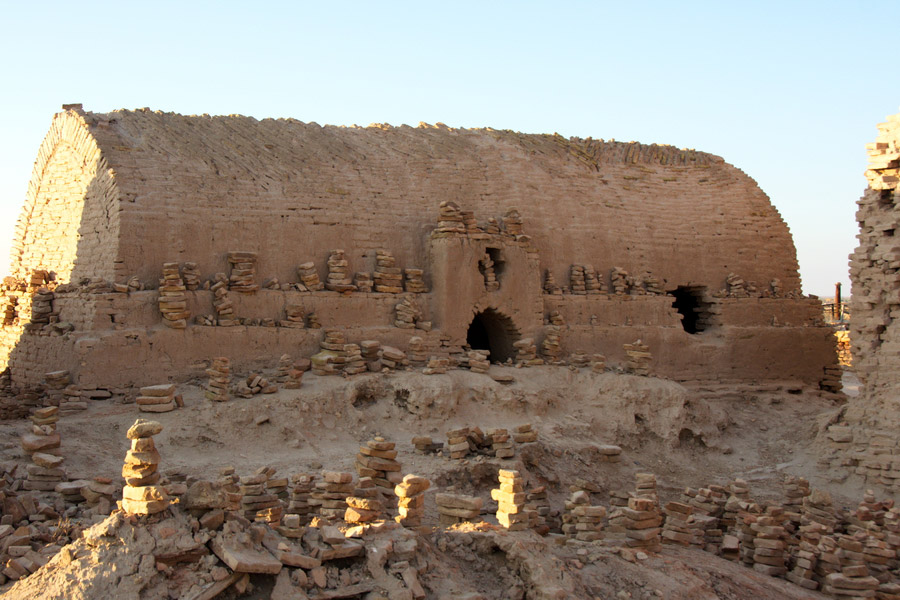
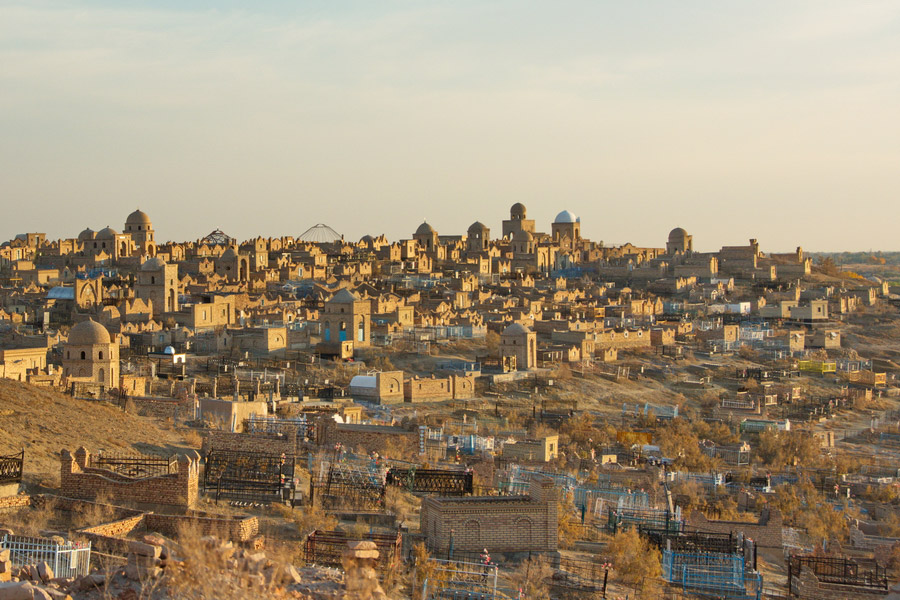
Mizdarkhan necropolis, an ancient cemetery, located next to the remains of Gyaur-Kala fortress is one of the oldest and most visited pilgrimage sites in Karakalpakstan. The fortress received its name during the Arab conquest and means « a fortress of infidels » because archaeologists and scientists discovered that the inhabitants of the fortress were Zoroastrians before the Arab conquest. The entire complex of monuments is located on three hills 3-4 km south of the city of Khojeyli in Karakalpakstan. How did Mizdarkhan become a place of pilgrimage for Muslims? Most likely Gyaur Kala appeared first. Its appearance dates back to the 4th century BC and the power of its ten-meter-thick walls impresses. Its remains continue to protect the ruins of the two citadels of the city, one of which, as archaeologists believe, was a construction of the palace, and the other – the Temple of Fire.
Probably the other hill, in front of the fortress, was originally a place for Zoroastrian worship where the inhabitants of the fortress placed their dead in ossuaries (vessels for bones) discovered by archaeologists are proof of this, as well as a kind of dakhma – a flat-roofed tower, where Zoroastrians left their dead, for birds to chew on their remains, and relatives would come to collect the bones and pile them in ossuaries.
Obviously in the 8th century, after the capture of the fortress by the Arabs, the religion of Zoroastrianism was destroyed in all areas of Central Asia and the dead were buried according to Muslim rites. There is a legend that says that the tomb of Adam was located in the Mizdarkhan necropolis, this is what contributed to the fact that the necropolis was transformed into a holy place. Moreover a mausoleum which was erected on the imaginary tomb of Adam has a special religious significance. These are so-called « apocalypse clocks » and an hourglass. Every year a brick falls from the walls of a building, according to legend, when the last brick falls, the end of the world will begin. The pilgrims therefore try to put the bricks back in place, believing that God hears their prayers and saves them.
Ayaz-Kala fortress

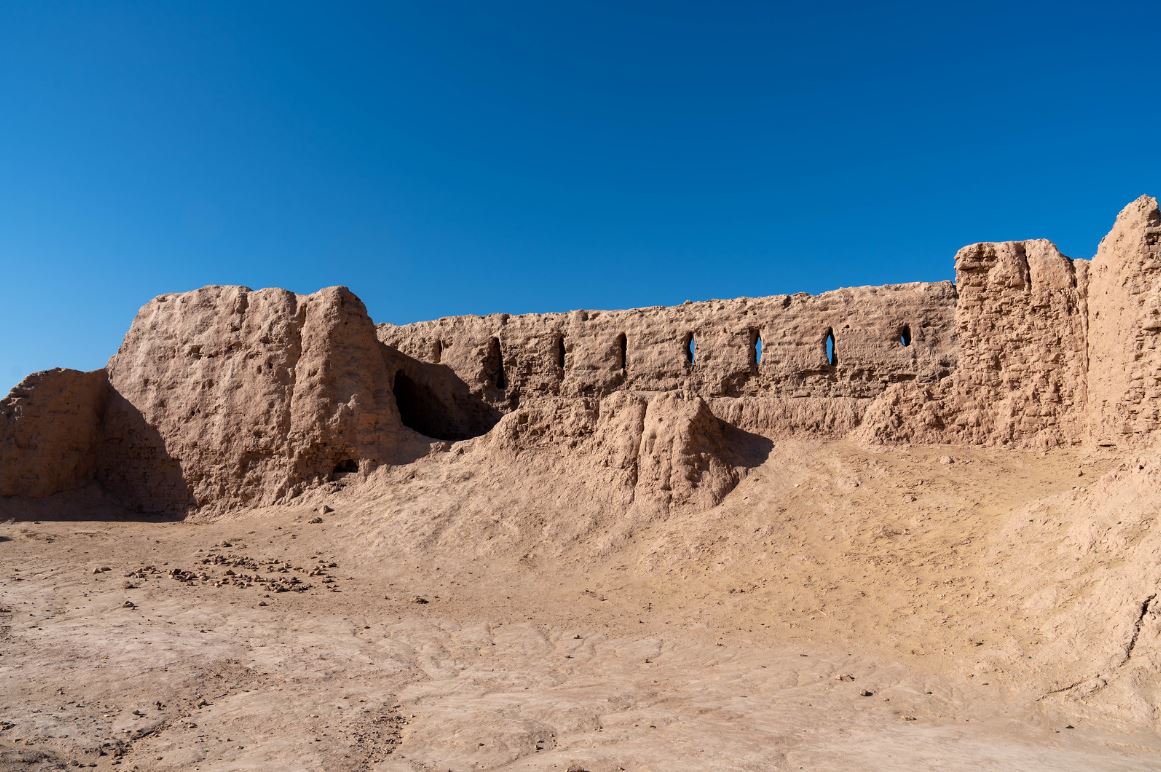
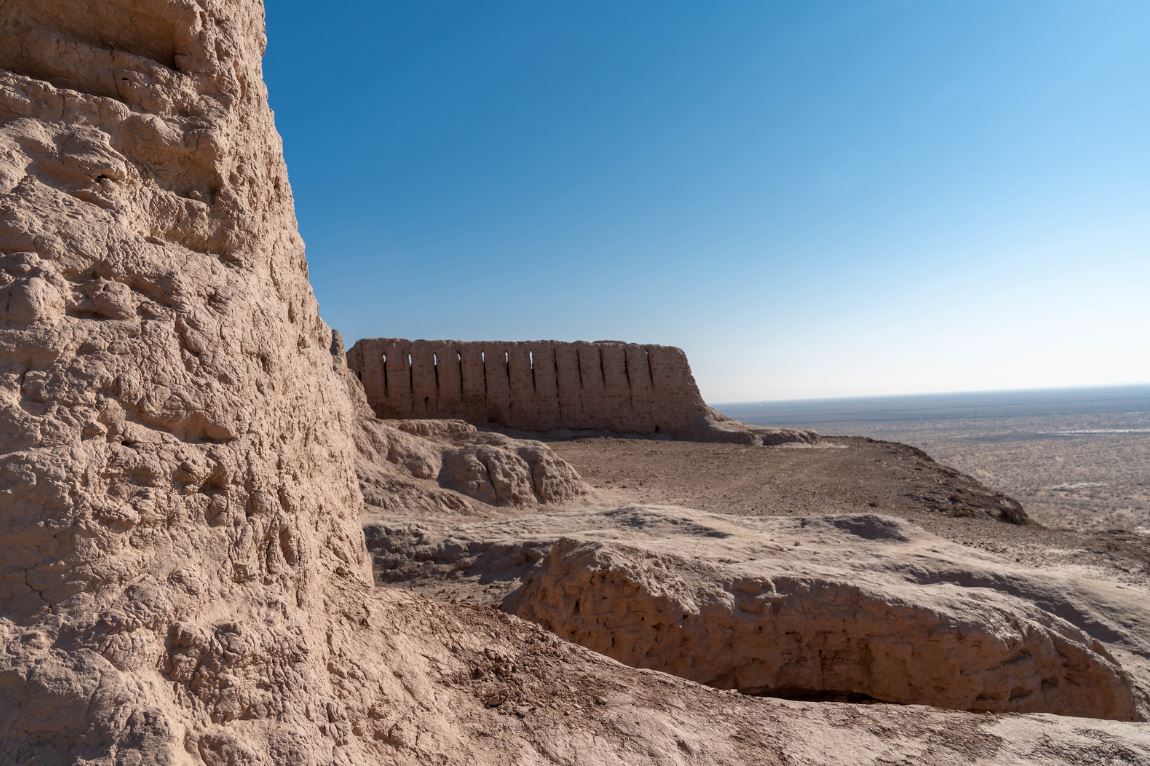


On the colored cliffs, in the Kyzylkum desert, the ruins of one of the largest castles of ancient Khorezm – Ayaz-Kala have survived. Ayaz-Kala is a monument of the Kushan period in the history of Central Asia. Popular legends associate the name of the citadel with the name of the legendary warrior Ayaz. Ayaz is a hero of Central Asian Turkish folklore. The semi-mythical hero, according to one legend, pounced on an Amazon princess who lived in the Kirk-Kiz fortress. Archaeologists claim that the Ayaz-Kala citadel belongs to the 2nd century AD – a prosperous time of the Kushan Empire. Stretching in a chain from east to west it was part of a system of borders, built to protect the oasis at the edge of the desert. All the fortresses were located at a visible distance from each other, probably to facilitate the transmission of signals from the approaching enemy.
Unlike other citadels of ancient Khorezm the Ayaz-Kala complex is very interesting. It features unfortified rural settlements – a collection of residential buildings, each with a large courtyard, surrounded by a low brick wall and planted, apparently, with gardens and orchards at the time. On one of the courtyard walls is a relatively small 15-room detached house, indicating that the process of separating the individual household from a tribal community had already begun at that time. Probably it was the house of a rich official or a garrison commander. Among the dozens of unfortified farms of the Ayaz-Kala complex, three building-fortresses stand out for their large size. This is Ayaz-Kala 3, a giant fortress with a large courtyard surrounded by strong walls with towers and a maze near the gate. Near its northeast and northwest corners are intersecting 40-room houses with hallways.
The ruins of Ayaz-Kala 2 were built on a rock, also from the Kushan period, but rebuilt by the Afriguids in the V-VII centuries. On the cliff plateau next to the settlement is Ayaz-Kala 1 with its semicircular towers, a labyrinth near the gate, an arched gallery in the base of the wall and a well, dug in the center of the rock which was a gathering place for livestock – the main wealth of the inhabitants. To the northeast of Ayaz-Kala 1, there are the remains of a watchtower. Thus, Ayaz-Kala was neither a city nor a settlement, but a complex of fortresses that hosted frontier detachments of Kushan almost 19 centuries ago.
The ruins of Ayaz-Kala have been hidden with the sands for millennia but today, thanks to numerous archaeological excavations, we can touch its ancient history.
Toprak-Kala fortress


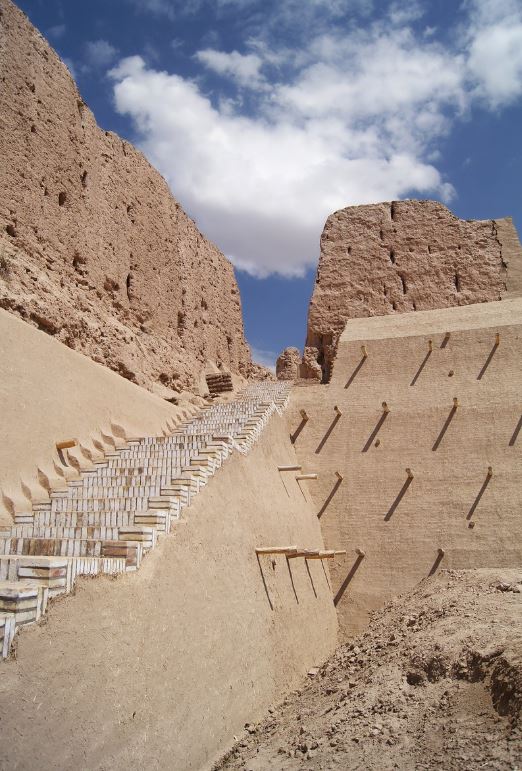


The ancient Toprak-Kala citadel is an outstanding cultural monument of Khorezm dating from the period from the 1st to the 6th century AD. The capital of Khorezm was here in the 3rd century AD. Toprak-kala was discovered by the Khorezm expedition led by archaeologist S.P. Tolstov in 1938. According to the plan, the city had the shape of a rectangle. The governor’s palace in the form of a huge castle with three towers was located in a northwest corner. The fire temple was to the southeast of the castle. A long street dividing the city into two parts led from the fire temple to the south. The roads leading from it separated massive houses into blocks forming the capital of Khorezm. Built in the 3rd century, the fortress served as the residence of the khorezmshahs – the rulers of the country until 305 CE. Many aggressive wars forced the governors out of residence, and the city gradually fell into decay.
Coins, fragments of ossuaries of Zoroastrians, magnificent samples of artistic culture were found during archaeological excavations. The researchers also found fine manufactured ceramics, wool and silk fabrics, gold ornaments and a necklace of 300 glass beads, clay, amber, corals, bowls. Archaeologists have also discovered workshops for making bows that made Khorezm famous. The architecture of the monument is an outstanding example of the art of town planning and fortification of ancient Khorezm. Of particular interest is the Governor’s Palace with its three towers. Three grandiose towers with halls inside mounted 30 meters high, their height of 25 meters today is a testimony to the advanced level of architectural development in Khorezm. However, the ancient Toprak-Kala citadel is famous not only for its unusual architecture, but also for its unique finds of scriptures in the ancient Khorezmian language, discovered in four buildings in the southeastern part of the palace. Archaeologists have found 116 documents written in black ink on wooden plates and on scrolls of leather. Eighteen wooden documents remained in very good condition. Although the documents are not yet completely read, their nature is already defined. These are economic documents from the palace archives. Three of the documents found bear fixed dates: 207, 231 and 232 CE.
In addition to the archives, sculptures and paintings also arouse interest. It is not without reason that the Toprak-Kala is named the Museum of Fine Arts of Ancient Khorezm. It is the only fully dug architectural monument in Khorezm. The dimensions and the genius of an architectural design make Toprak-Kala one of the most unique monuments of Khorezm.
Gyaur-Kala fortress


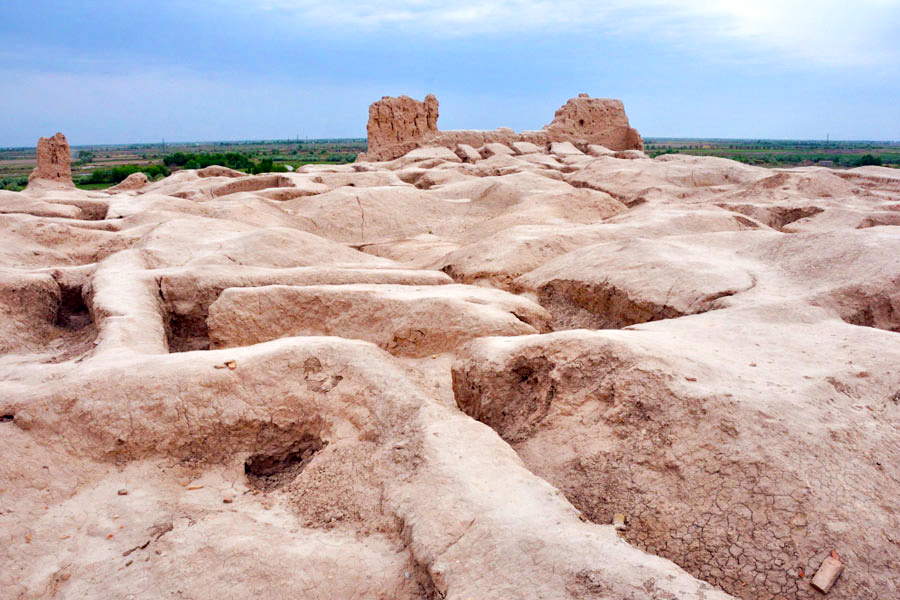
« The fortress of the infidels » – this is how the name of this ancient fortress translates. It was built around the 4th century BC. Its 10 meter high walls impress with their power. They surround the ruins of two citadels which could be constructions of temples and palaces. This is not surprising, because this district is considered the birthplace of the oldest texts of the Avesta – Gathas, written by Zarathustra. The many ruins of the temples are proof that the inhabitants of Gyaur-Kala were Zoroastrians who worshiped fire.
It should be noted that apparently the other citadel was the governor’s palace. Of course, this foundation included the courtyard, a number of outbuildings, living quarters decorated with carvings and paintings. Archaeologists have found other remains of luxury goods there: various ornaments, fabrics decorated with gold stitching, and many other things, testifying that representatives of the upper realm lived there.
The fortress of Gyaur-Kala was at the crossroads of trade routes. The northern branch of the Great Silk Road was not far away, and it largely contributed to the existence of this ancient fortress compared to others in ancient Khorezm. The fortress continued to function until the arrival of the Mongols in Central Asia in 1220. Genghis Khan’s eldest son, Juchi, ordered the city to be destroyed to the ground. Later, the inhabitants of the city moved and founded a new city near the ruins of Gyaur-Kala.
 Voyage Wonder