

Khiva is a city-museum that amazes with its tranquility and calm. It is not without reason that it is considered the jewel of Uzbekistan, located in the desert. There was a time when the caravans of the Great Silk Road passed through here. Khiva was also the capital of the Khanate of Khiva. Once in Khiva, you will find yourself in a medieval city where the spirit of modernity is injected only by electric wires. The cobbled streets, clay mosques, elaborate designs and majestic fortress walls will impress even the most discerning tourist. The entire old town is listed as a UNESCO World Heritage Site.
According to legend, Khiva appeared around a well called Kheywak, which was dug by Sim, son of Noah. Archaeologists claim that Khiva already existed in the 6th century BC and was indeed called Kheywak. And a well of the same name still stands in the center of the city. Before the Arab conquest, Khiva was the city of Zoroastrians. In 712, after Quteiba ibn Muslim came to power, scholars and representatives of noble families were razed to Khiva. In the 9th and 11th centuries, Khiva became the main center of religion and science. Scholars like Al-Khorezmi and Al-Beruni lived here. In 1220 Khiva was destroyed by the orders of Genghis Khan. In the 16th century, nomadic Uzbek tribes arrived in Khiva. In 1598 Khiva was proclaimed the capital of the Khiva Khanate, and in the first half of the 17th century it became one of the Islamic centers. Many mosques and madrasahs, educational institutions for the study of Islam, have been erected here. In the 18th – 19th centuries, Khiva was also endowed with many architectural sights. Several khan palaces were erected. In 1873, the Khanate of Khiva was partially conquered by Russian troops. In 1920, the last khan Asfandiyar Khan was overthrown in the city. In 1924, Khiva became part of the Republic of Uzbekistan.
Sights and attractions of Khiva


Ichan-Kala is an open-air city-museum of Khiva. It is an old fortress surrounded by ramparts. Ichan-Kala occupies 26 hectares, and about 300 families live there today, most of whom are hereditary craftsmen. There is a state historical and archaeological museum reserve on the territory of the fortress. All important places of interest of Khiva are located in Ichan-Kala. The construction of the fortress began in 1598. Most of the buildings that have survived to the present day were built in the 18th – 19th centuries, but some are older. Scientists assume that Itchan-Kala rests on an ancient fortification that stood here in the 5th century.
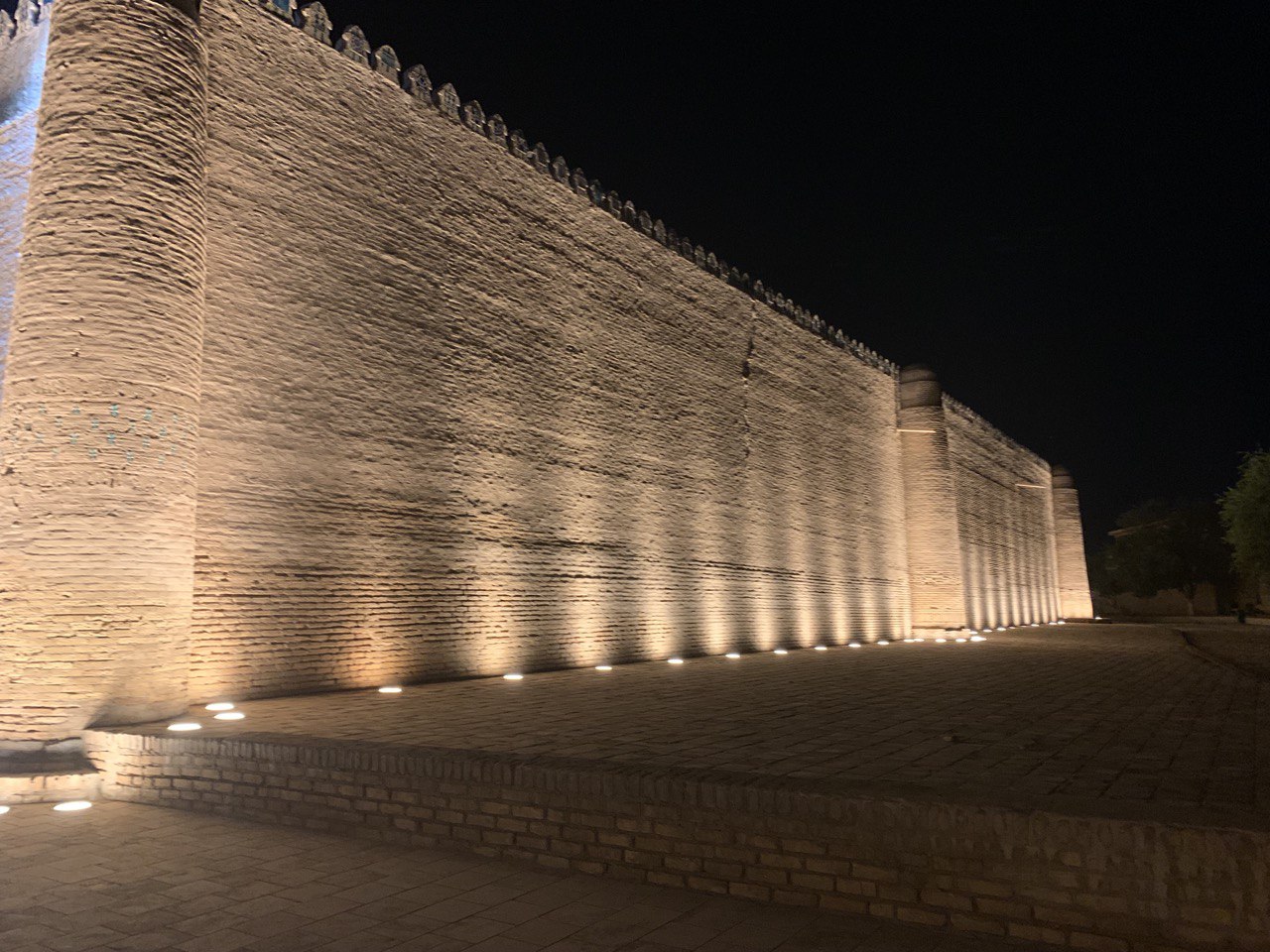
The ramparts of the Ichan-Kala fortress are a curiosity in their own right. They are 5-6 meters thick, 8-10 meters high and 6,250 meters long. You can climb them from the north gate and see Ichan-Kala through the battlements. Several gates and defensive towers have also been preserved there. Of particular interest are Ata-Darwaza (Main Gate), Baghcha-Darwaza (Garden Gate), Tash-Darwaza (Stone Gate) and Palvan-Darwaza (Hercules Gate).


Madrassah of Muhammad Amin Khan was built in 1855. It is located near the truncated minaret of Kalta Minor. The construction of the madrassah was carried out simultaneously with the construction of the minaret. The construction of the school was initiated by Muhammad Amin-khan. This madrassah is the largest in Khiva. It was also more richly decorated than other madrassahs. There were 125 cells housing 260 students. These cells compared to those of other madrassahs were twinned. Today, this madrassah is transformed into a hotel and a cafe in the building of the old madrassah.


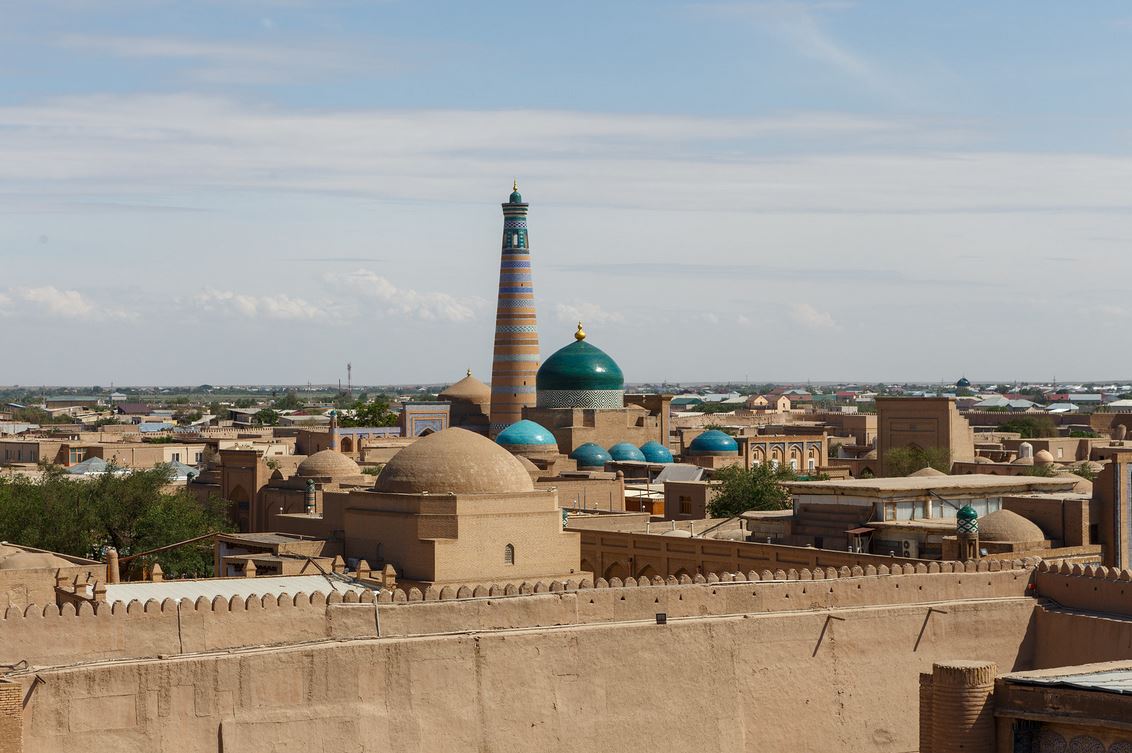
The Kalta Minor (Kalta Minor) minaret is perhaps the city’s most iconic landmark. Kalta Minor means « short minaret » or « truncated minaret » in Uzbek. According to the plan of the initiator of the construction, Muhammad Amin Khan, the minaret should have reached a height of 70 to 80 meters, which would have made it the highest in the Muslim world. But in 1855, when the minaret was 29m high, construction was halted. Historians say it is due to the death of Muhammad Amin Khan. The minaret was decorated with majolica and blue, green and white tiles. Today, the Kalta Minor is one of the most beautiful minarets in Central Asia.
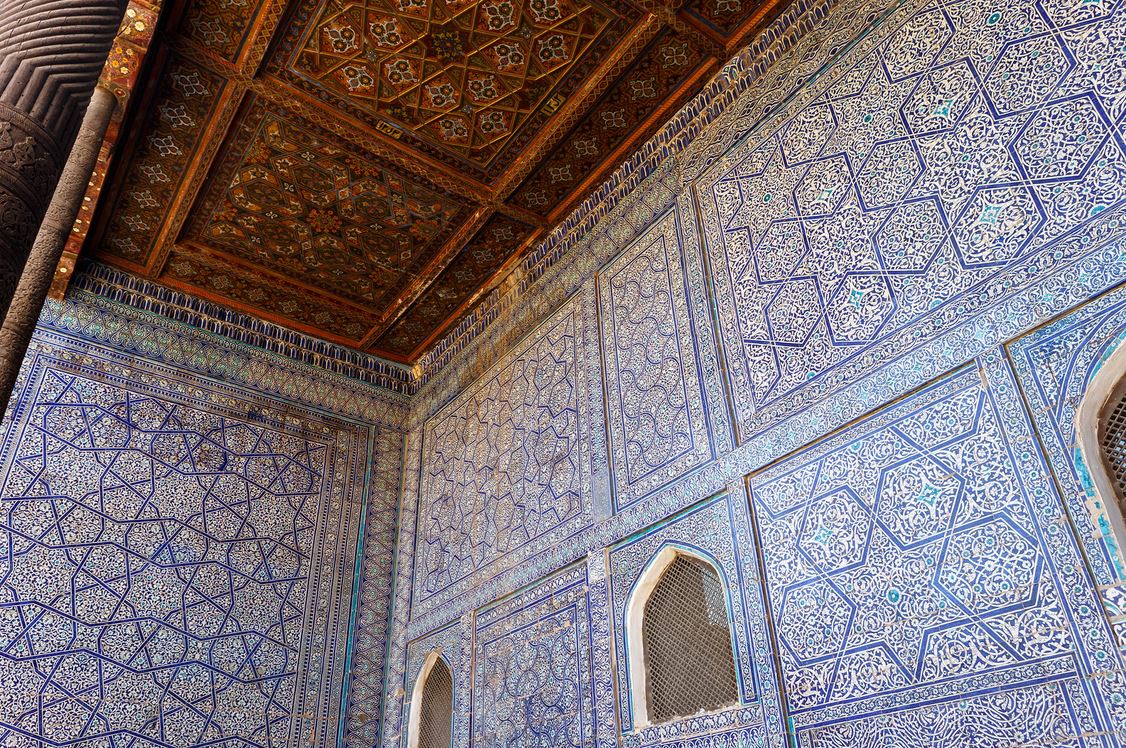


Kunya Ark is a fortress within a fortress. The construction of the citadel began in 1688 in the enclosure of Ichan-Kala. Kunya Ark was separated from the main fortress by a wall and served as a residence for the khans of Khorezm. Two mosques (summer and winter), the chancellery of the khan, a reception and audience hall, a harem, a mint and domestic premises were erected there.


The Islam-Khodja complex, including the madrassah and the minaret of the same name, was built in 1910. It is dedicated to Islam Khodja, prime minister of ruler Asfandiyar Khan of Khiva. The buildings were built in the 14th century tradition. The 56-meter minaret is considered the tallest in Khiva. It can be seen from almost anywhere in the old town.
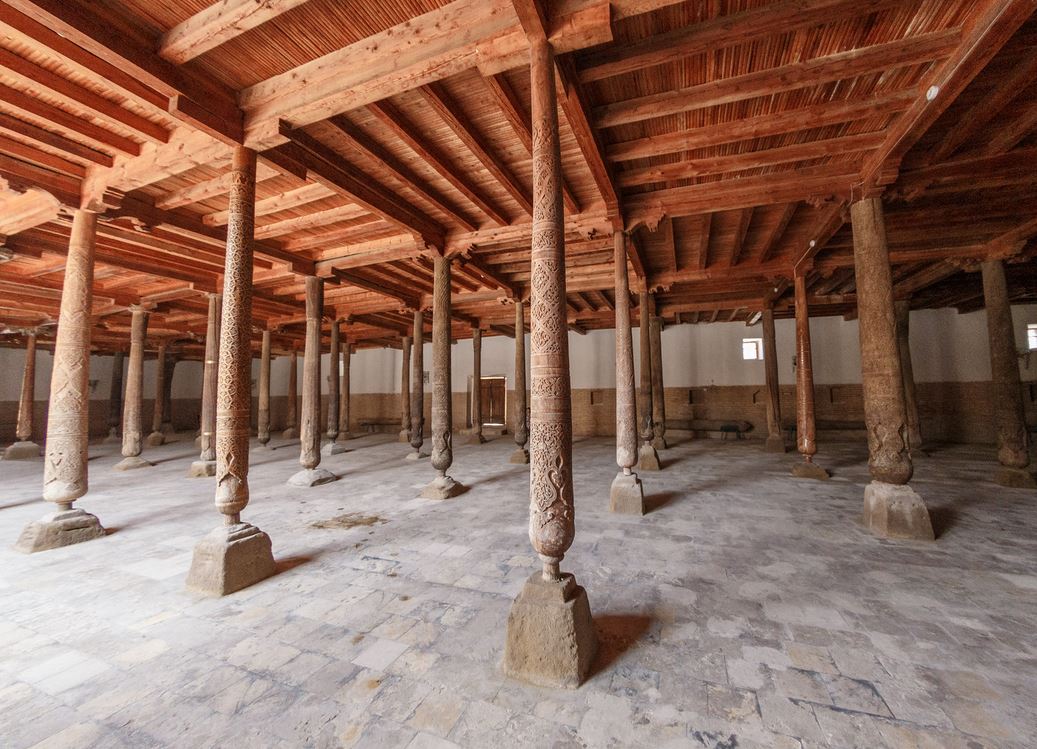

The first Djuma mosque was built there in the 10th century. The modern Friday Mosque was erected at the end of the 18th century. The building is unique in that it has no portals or cupolas. There are 213 wooden pillars inside the mosque which support the ceiling. In addition, 21 of them have been preserved since the X-XII centuries. And the oldest carved doors of this mosque date back to 1316.
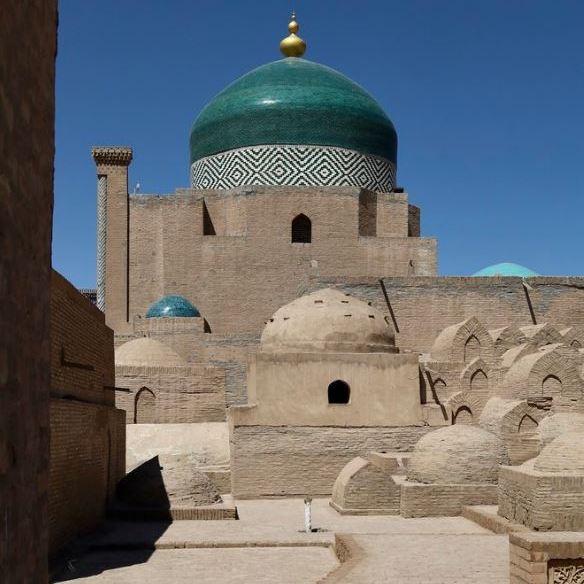
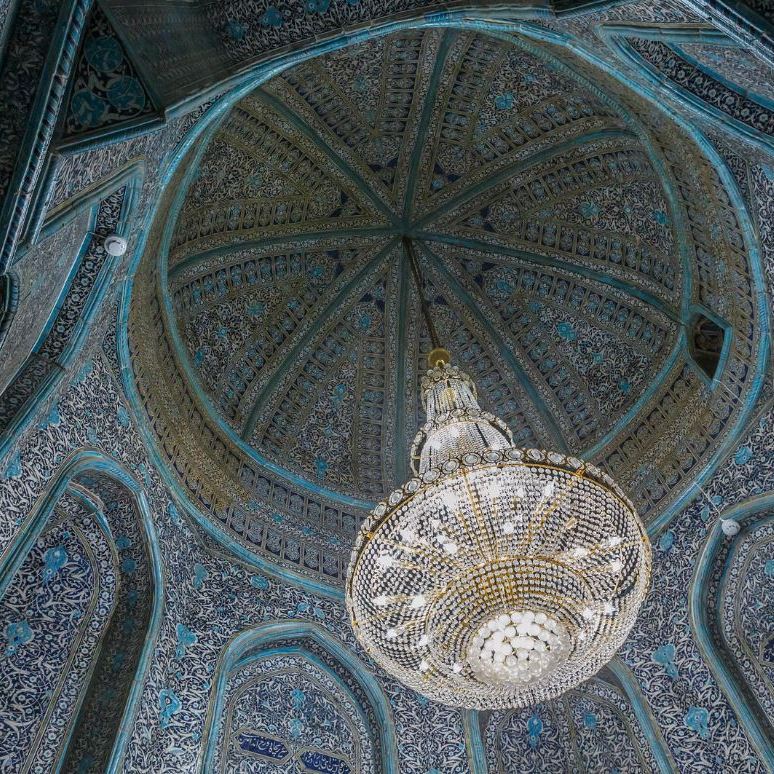

The mausoleum of Pahlavan Mahmud is a sacred place for the people of Khiva. Pahlavan Mahmud lived in the 12th and 13th centuries. Coming from a family of craftsmen, he became famous for his exploits and was revered by the common people. After his death, people started coming to his grave. Later, a mosque and a Sufi khanaka abode were built near the mausoleum. Likewise, noble rulers were buried here. In 1913, halls for the recitation of the Koran and aiwans (terraces) were built there. Even today, hundreds of devotees visit the tomb of Pahlavan Mahmud.


Tash Hovli Palace, which was the main palace of the rulers of Khiva, was built by Allakuli Khan in 1838. The building is decorated with frescoes, sculptures and ganch. The palace had a living room for the khan, a separate half for wives, a guest room (mehmonkhona), a hall for official ceremonies and receptions, an audience hall and rooms for servants.


The mausoleum of Said Allauddin is one of the few ancient buildings in Khiva. The mausoleum was built in the 14th century and extensive restoration work was carried out there in 1825. Said Allauddin was a relative of the Prophet Muhammad and a famous preacher. Muslim pilgrims from all over the world started coming here almost immediately. The pilgrimage still continues today.
In 1835, by order of Allakuli Khan, a madrassah was erected, bearing the name of the ruler. The religious school was erected near the Tash-Hovli Palace. In addition to the two-storey cells (hudjras), it housed a mosque, a library and a study room. The facades of the buildings are clad in colored majolica. Today, souvenir shops can be found within the walls of the Allakuli Khan madrassah.


The Ak Mosque (White Mosque), erected in the first half of the 19th century, rests on the old foundations of 1647. This small mosque, measuring 25.5 by 13.5 meters, differs from other mosques in Khiva. It has an ascetic style with only carved windows and doors.
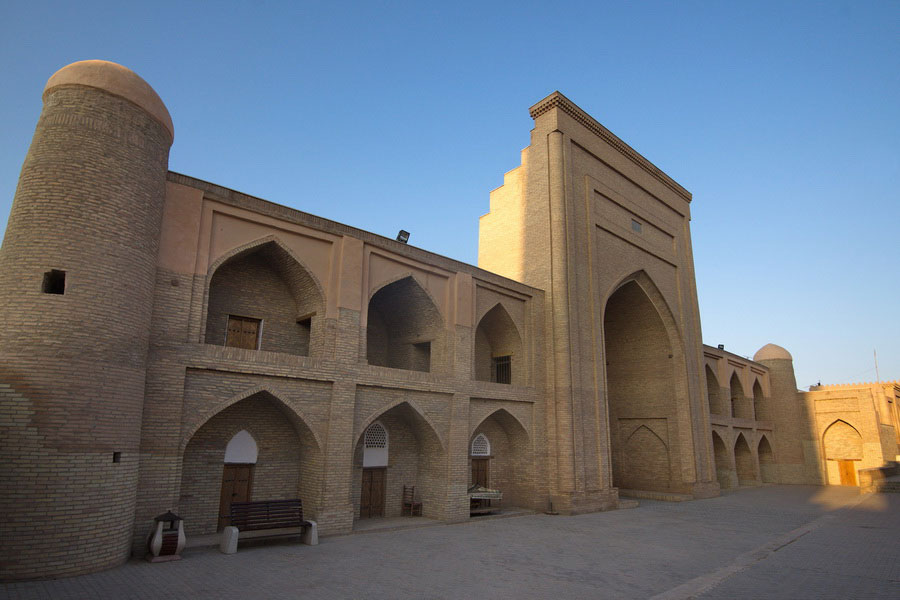

Shergazi Khan madrasah was built in 1726. There is a pond in the center of the school. There was also a mosque, an auditorium and cells for students. Unlike other madrassahs, the student cells had special corners for utensils and necessities. The poet and philosopher Makhtumkuli from Turkmenistan, the Sufi saint Beket-ata from Kazakhstan and the Karakalpak poet Azhiniyaz studied in this madrassah.

Nurullabai Palace is the summer residence of the rulers of Khiva. It was built in 1912 by Asfandiyar Khan. There are ceremonial halls, the most interesting of which is the throne room. It is in the style of modern Russian art, and has preserved tile stoves made at the Imperial Porcelain Manufactory in St. Petersburg. All rooms in the palace are decorated in different styles.
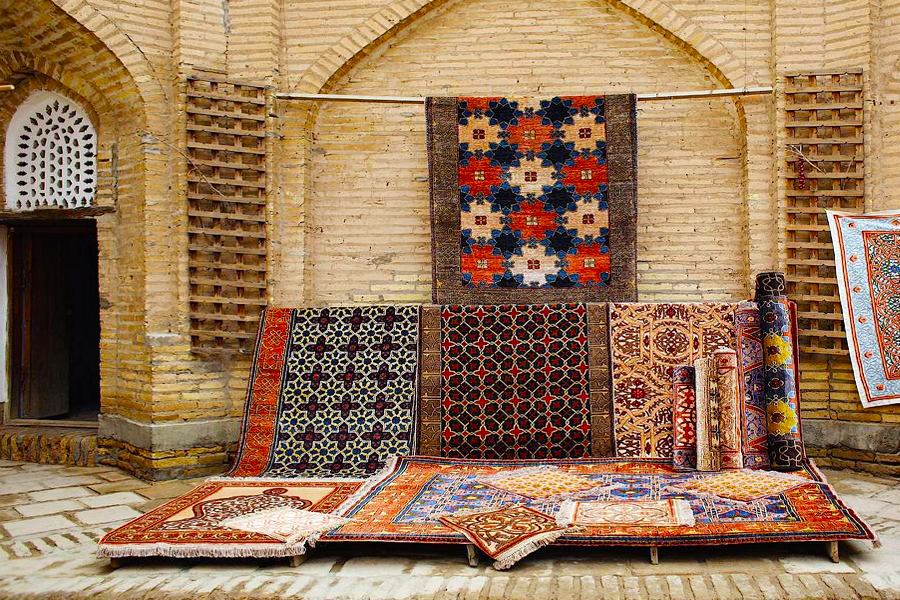
The silk carpet manufacturing workshop is a unique place. Women who create wool and silk rugs by hand using ancient technology work here. You will see how the characteristic floral patterns of Khiva are created, you will learn about the methods of dyeing yarns, you will see old carpets and much more.
 Voyage Wonder