
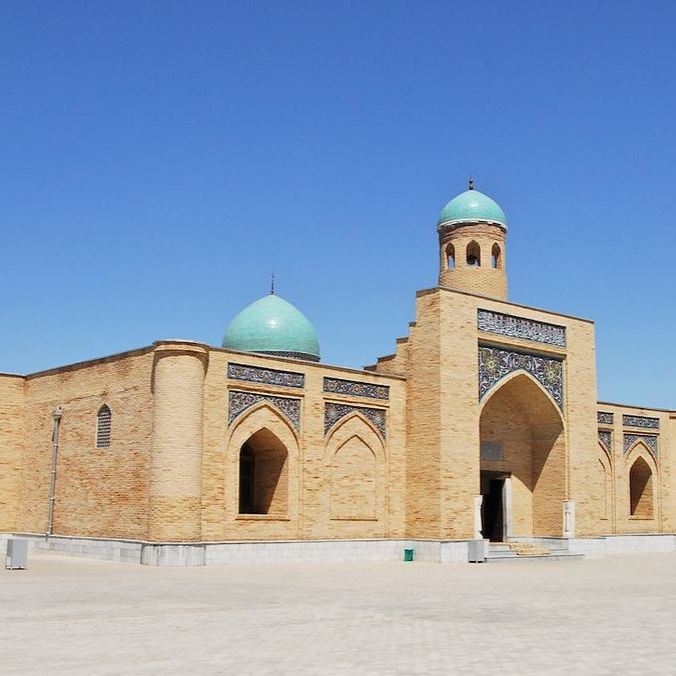
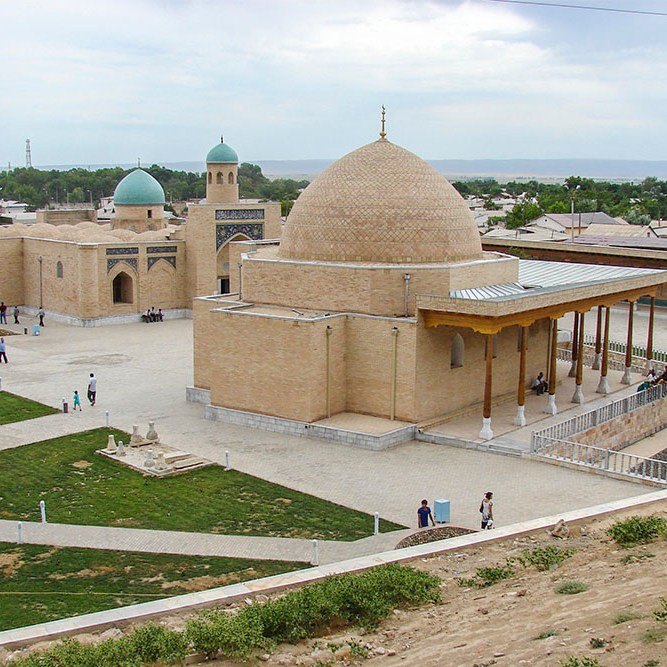
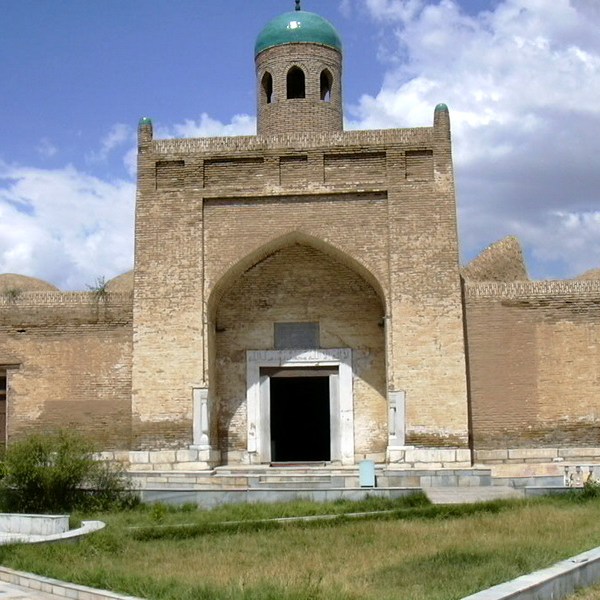
Nurata is a small town located at the foot of the foothills of the Nurata Mountains which stretch over hundreds of kilometers from Djizak and the starving steppe, from Navoi to the Kyzylkum desert. Nurata is an administrative and cultural center of the Navoi region and is located 200 kilometers from Samarkand. There are many legends related to the origin of the city and its name. The city was born thanks to the Nour fortress which was founded according to legends by Alexander the Great in the 4th century BC. It is assumed that the main reason for choosing this place for colonization was the spring, known as the name of Chashma. According to legends, several millennia ago, a stone of fire (probably a meteorite) fell from the sky and a source of healing water appeared where it hit the ground. Moreover, the name of the place is also linked to this legend. Nurata can be translated as « Rayon of the Father ». The Chashma complex is considered one of the most important Islamic centers in the region. Thousands of believers from nearby cities as well as other countries come to visit it every year. The complex consists of the Djuma Mosque (the Friday Mosque), the bathhouse, the hill, the old fortress and the well with the holy spring. It is said that sometimes a strange radiance appears above the source, confirming the local saying « Allah (God) has given us a Ray (Nur in Uzbek) ».
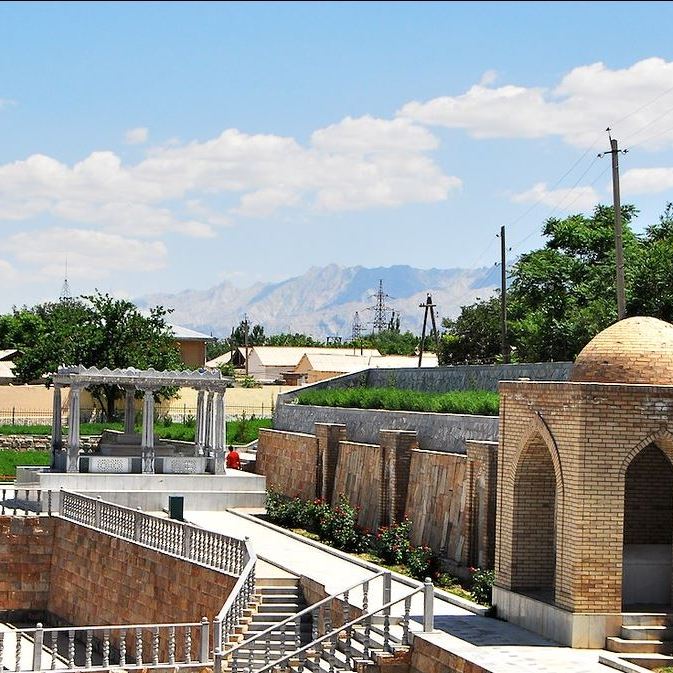

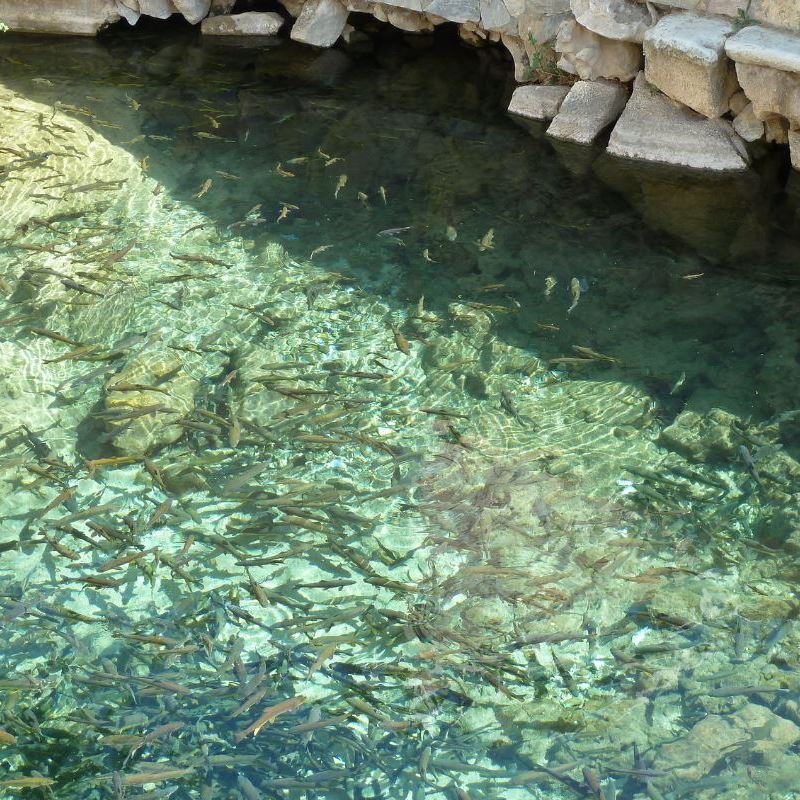
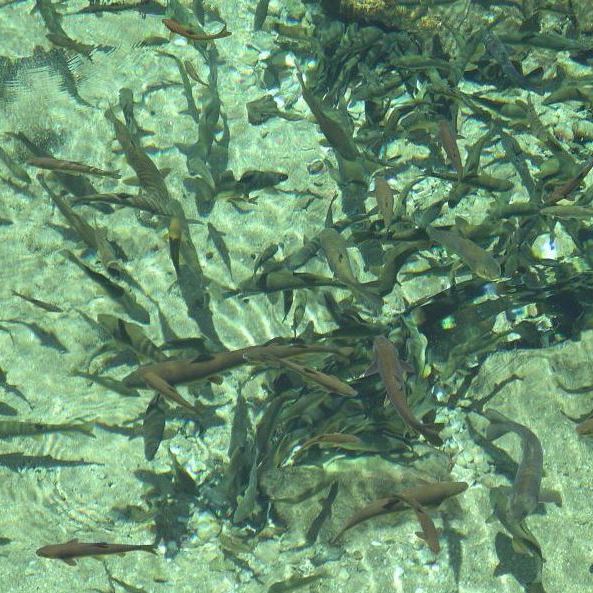
It should be noted the scientific data concerning this source: the temperature of the water is always 19.5º C. The composition of the water includes 15 micro-elements as well as gold, silver, bromide and iodine, which give it unique healing properties. Also, the spring is home to wonderful fish – the marinka which has no scales. This fish and the spring are considered sacred and people do not eat it.


One of the special features of Nurata is the unique system of underground water pipes starting from the sacred spring. These underground channels are called « kyarizi » and some time ago they were very popular in many Central Asian cities. Today the Nurata pipeline system is one of many systems that have survived to our time. People use it today as they did centuries ago.


Far from large industrial and tourist centers, Nurata leads a quiet and measured life. It only has 25,000 people and it seems like everyone knows each other here. The innocence and hospitality of the local people surprise tourists and pilgrims who come every year to visit this beautiful little town.
 Voyage Wonder